Engineered to international building standards including Miami-Dade NOA, NFRC, and AS2047. Designed for luxury residential, high-rise, and commercial developments.
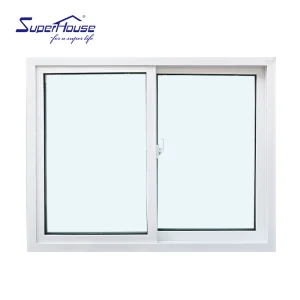
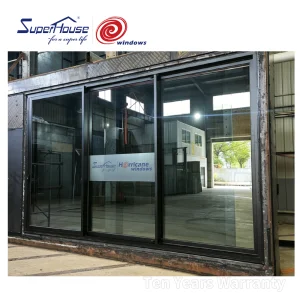
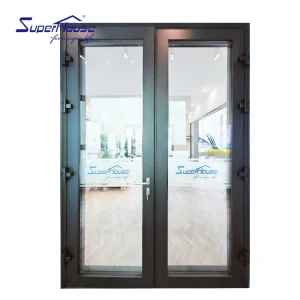
Analyzing global demand dynamics, material thermal performance standards, and China's strategic manufacturing role in modern architectural engineering.
The global architectural residential door and fenestration industry is undergoing a profound paradigm shift driven by stringent energy codes, severe climate events, and the demand for high-load structural aesthetics. Modern architectural designs favor ultra-slim sightlines paired with vast glass expanses, placing unprecedented structural stress on door frames. In response, aluminum alloy extrusions—specifically high-tensile 6063-T5 and T6 structural grades—have emerged as the undisputed material of choice for luxury villas, coastal high-rises, and low-energy urban developments.
China's manufacturing ecosystem for aluminum residential doors has evolved far beyond traditional low-cost assembly. Today, leading Chinese manufacturers operate vertically integrated smart factories capable of precision extrusion machining, multi-stage anodizing, robotic thermal barrier injection, and computerized dynamic load testing. As real estate developers, structural engineers, and commercial contractors seek supply partners capable of satisfying complex international building codes—such as Florida's High-Velocity Hurricane Zone (HVHZ) Miami-Dade NOA, Australia's AS2047 acoustic and water penetration standards, and North America's NFRC thermal performance ratings—China's B2B supply chain offers unmatched technical agility and scale economics.
Information Gain Key Takeaway: Modern aluminum residential door procurement is no longer driven solely by unit pricing. Leading developers evaluate total life-cycle cost, structural wind-load deflection limits (up to ±9000 Pa), overall window U-factors (striving for ≤ 0.8 W/m²K), and seamless integration with multi-point electronic lock systems.
Empirical data backed by 21 years of industry leadership and continuous technological investment.
Combining over two decades of metallurgical expertise with rigorous quality assurance systems.
Established in 2003, Steelwar Entry Systems Co., Ltd. operates a large-scale 40,000 m² manufacturing plant specializing in high-security exterior entry doors. With 21 years of continuous industry experience and 9 years of global export capabilities, the company generates $35 million in annual export turnover.
Steelwar focuses on key markets across North America, the Middle East, and Eastern Europe, primarily supplying building material distributors, security door stockists, and commercial construction contractors worldwide.
Supported by a solid trade background and a network of 1,100 supply chain partners, Steelwar maintains strict product reliability. Quality control is managed by a team of 50 QC specialists who execute dynamic impact resistance testing, automated frame tolerance checks, and corrosion-resistant coating audits.
R&D and Custom Engineering Strength: The company's engineering strength is backed by 75 R&D engineers who introduced 230 new product models last year. Custom options include ballistic steel cores, multi-point smart lock integration, customized RAL color finishes, and bespoke frame depths tailored to regional wall structures.
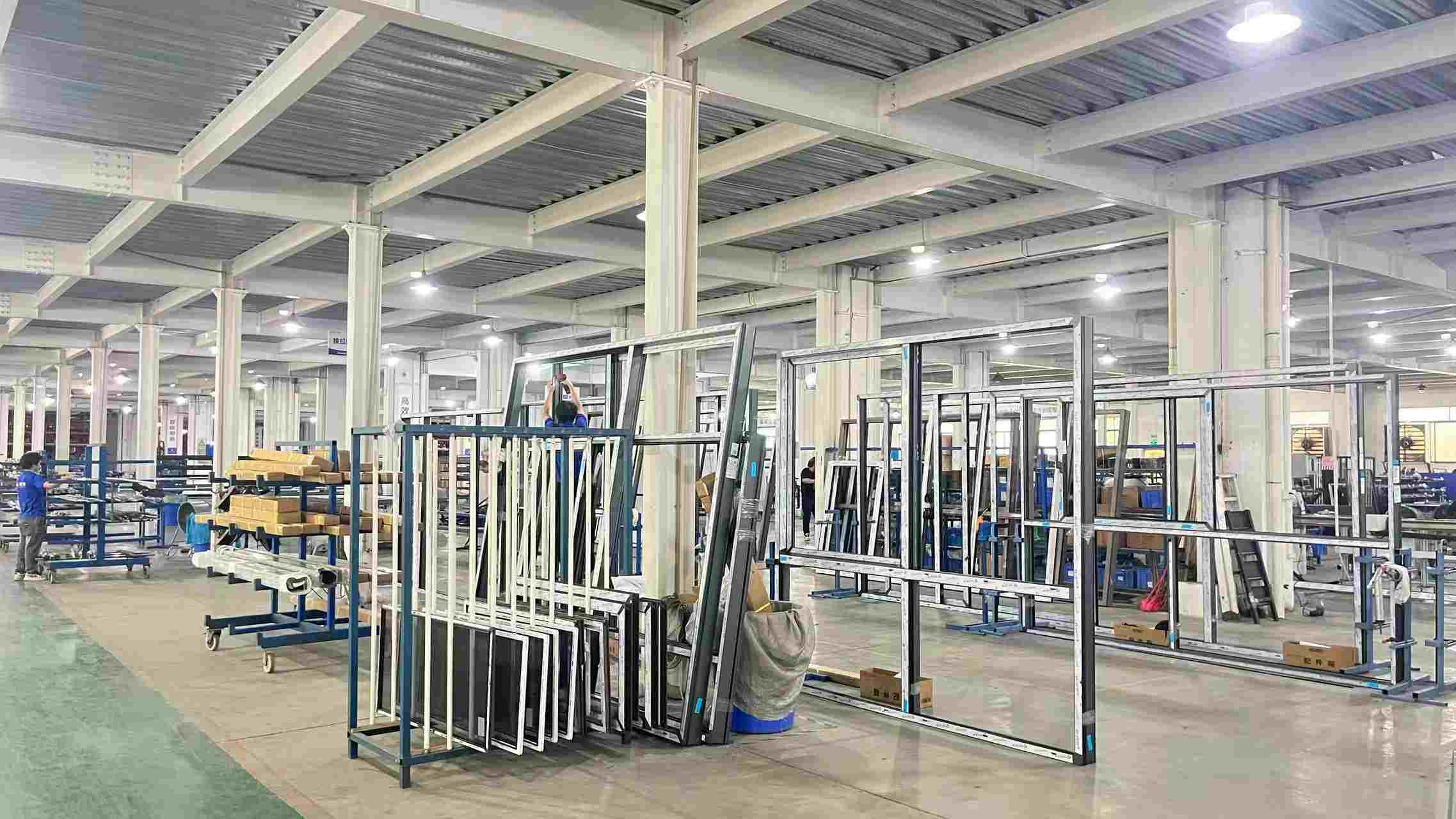
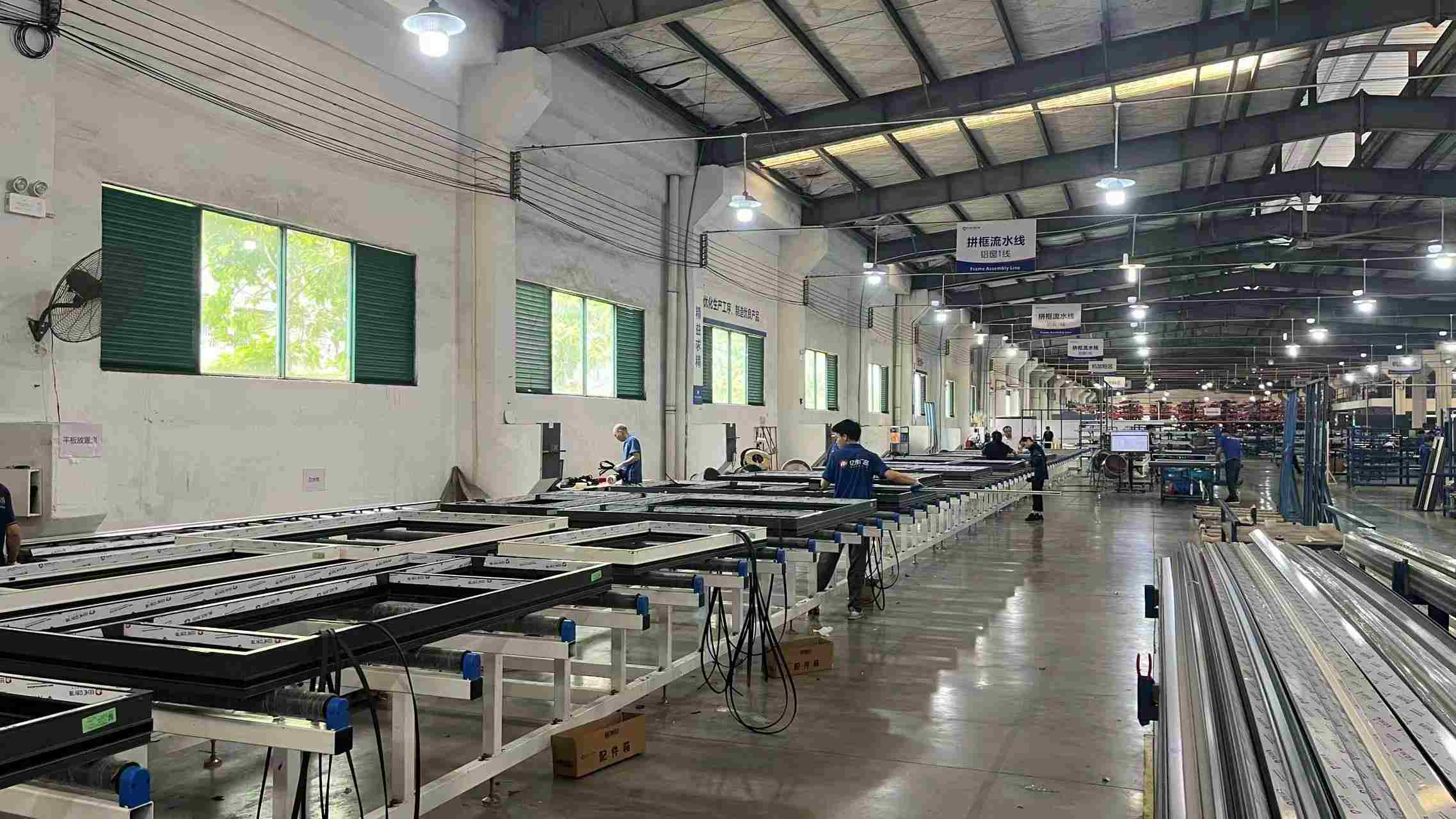
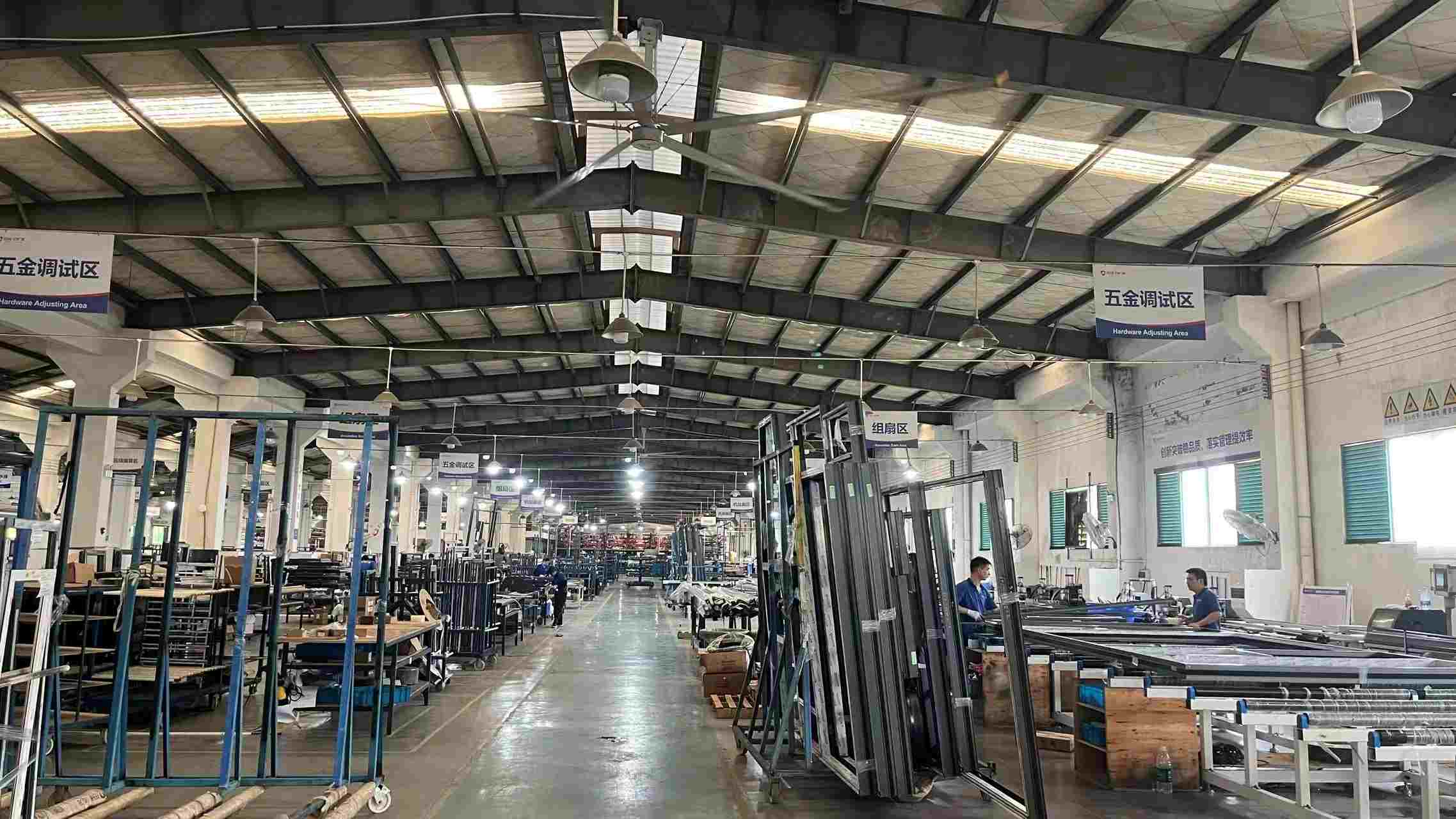
Visualizing our 11-stage automated manufacturing pipeline, CAD engineering center, and state-of-the-art CNC milling facilities.
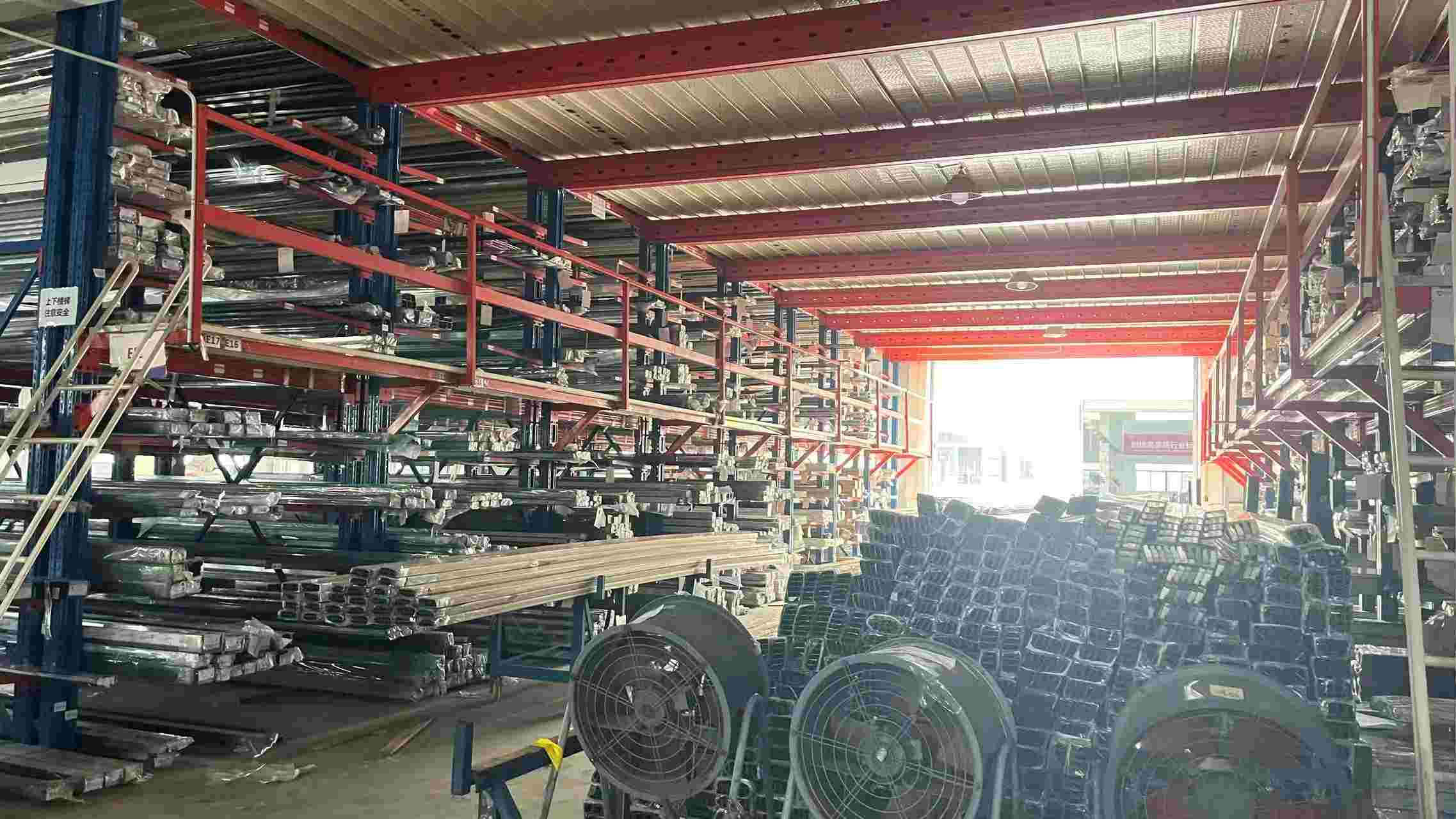 Raw Materials
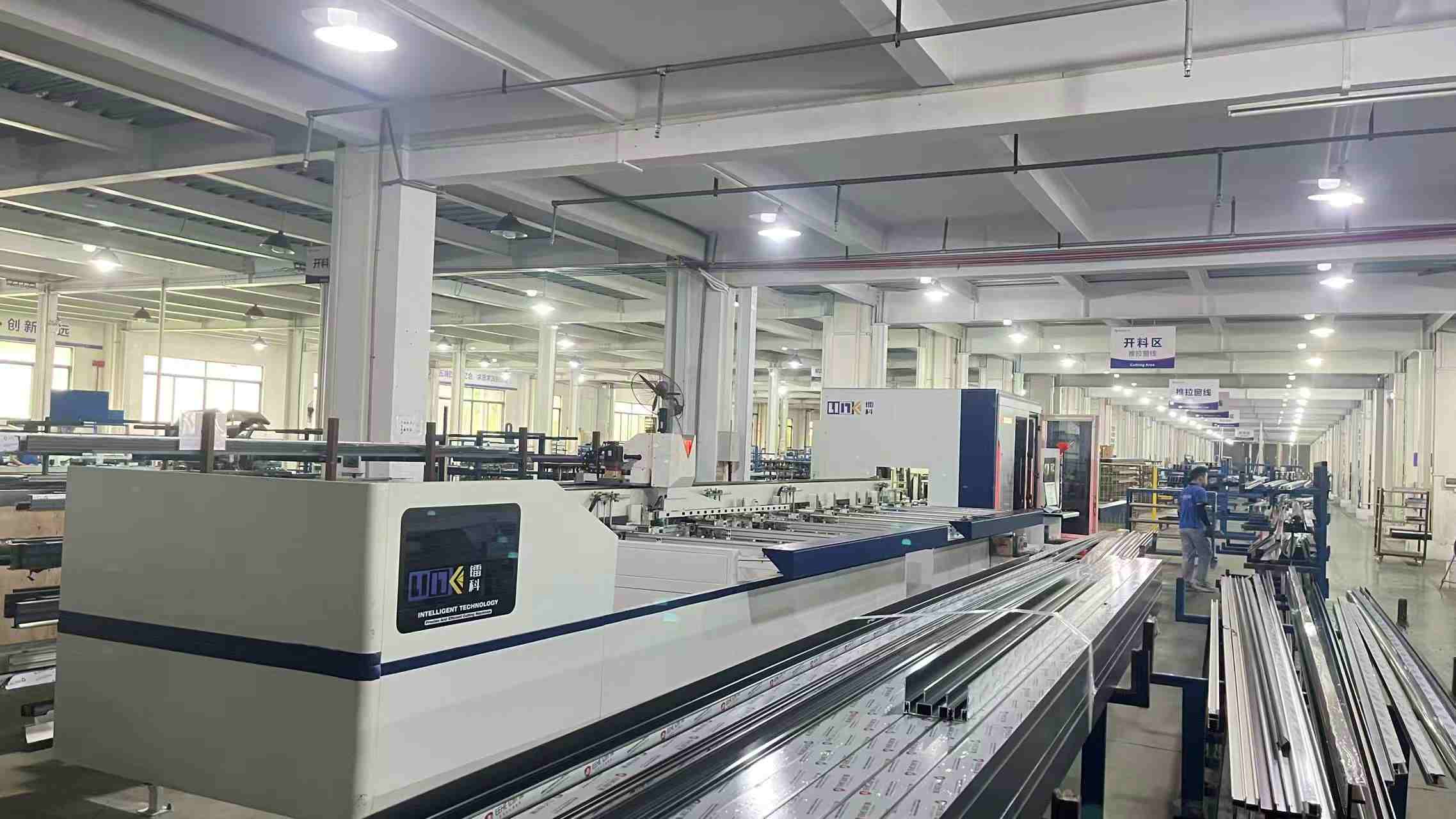 Cutting
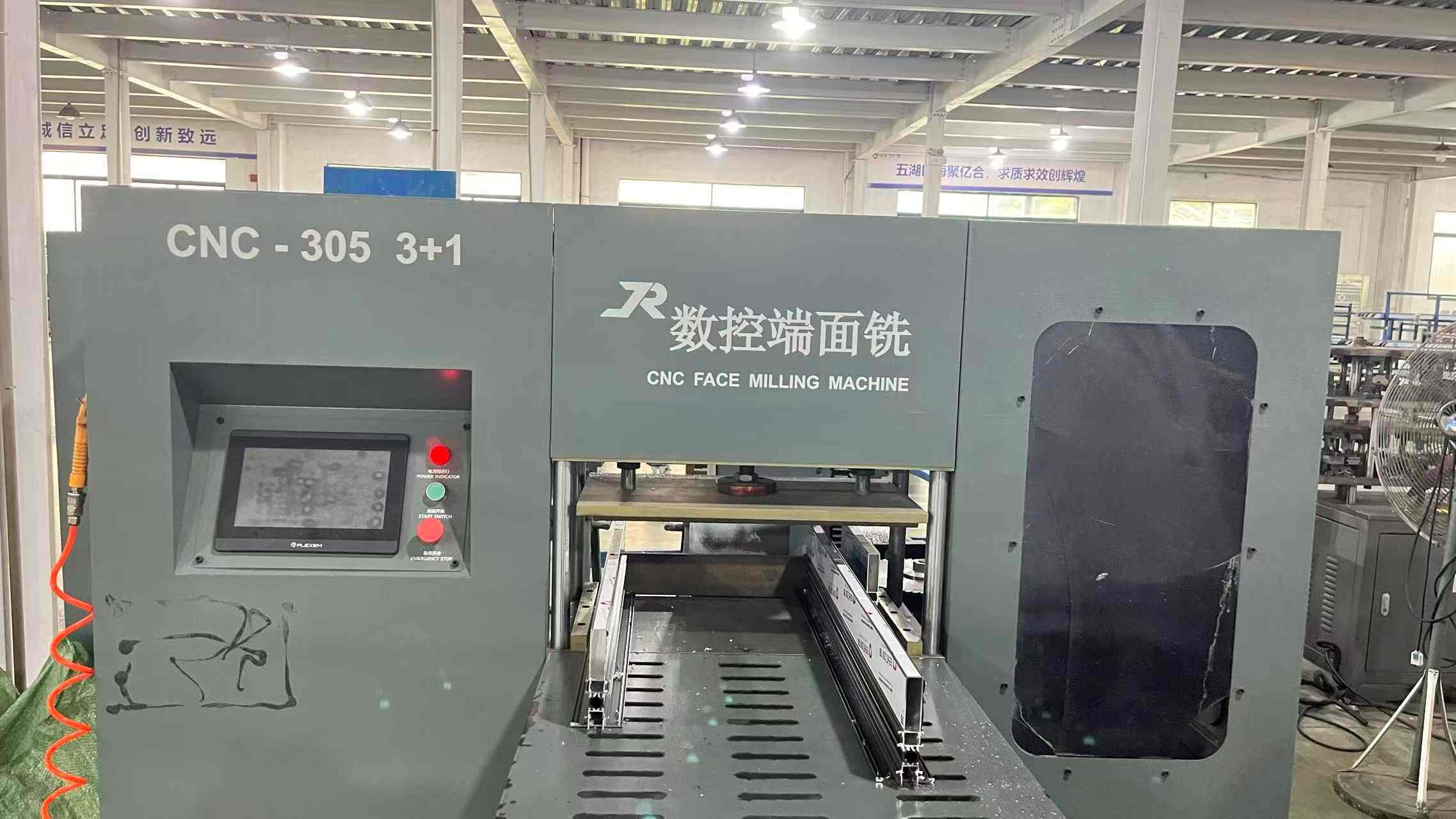 Milling
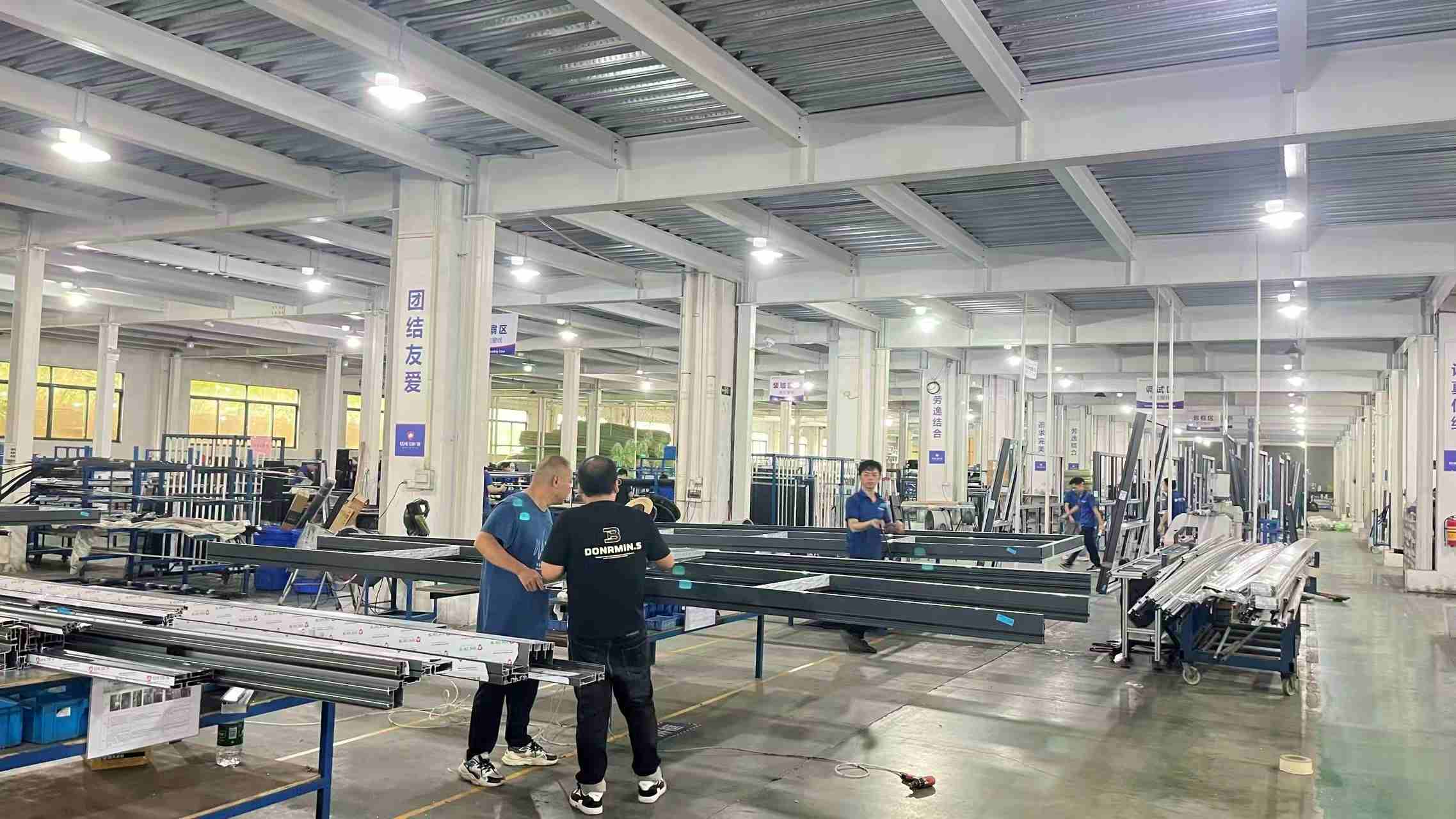 Assembling
 Assembling
 Gluing
 Testing
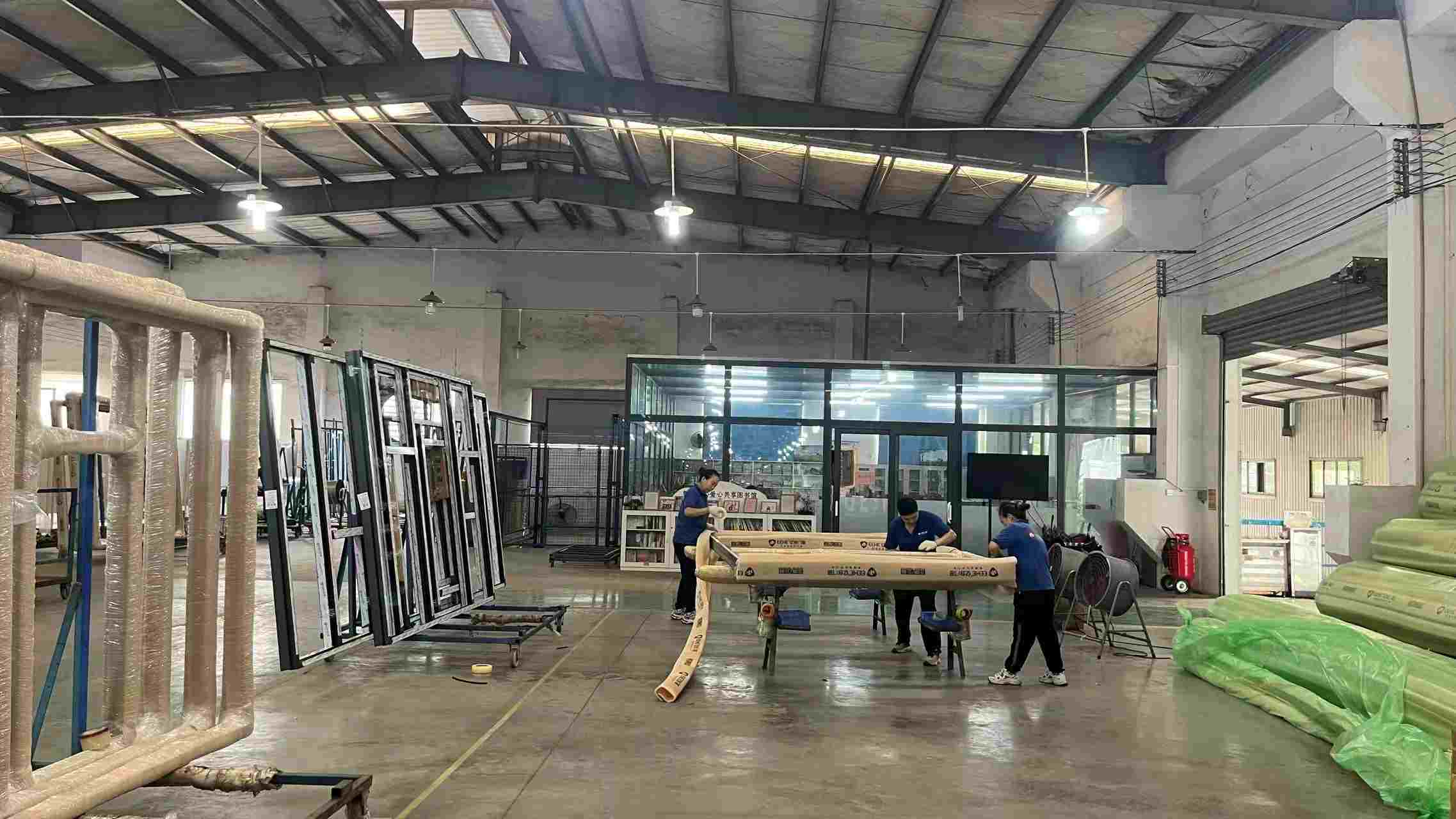 Packaging
 Warehouse
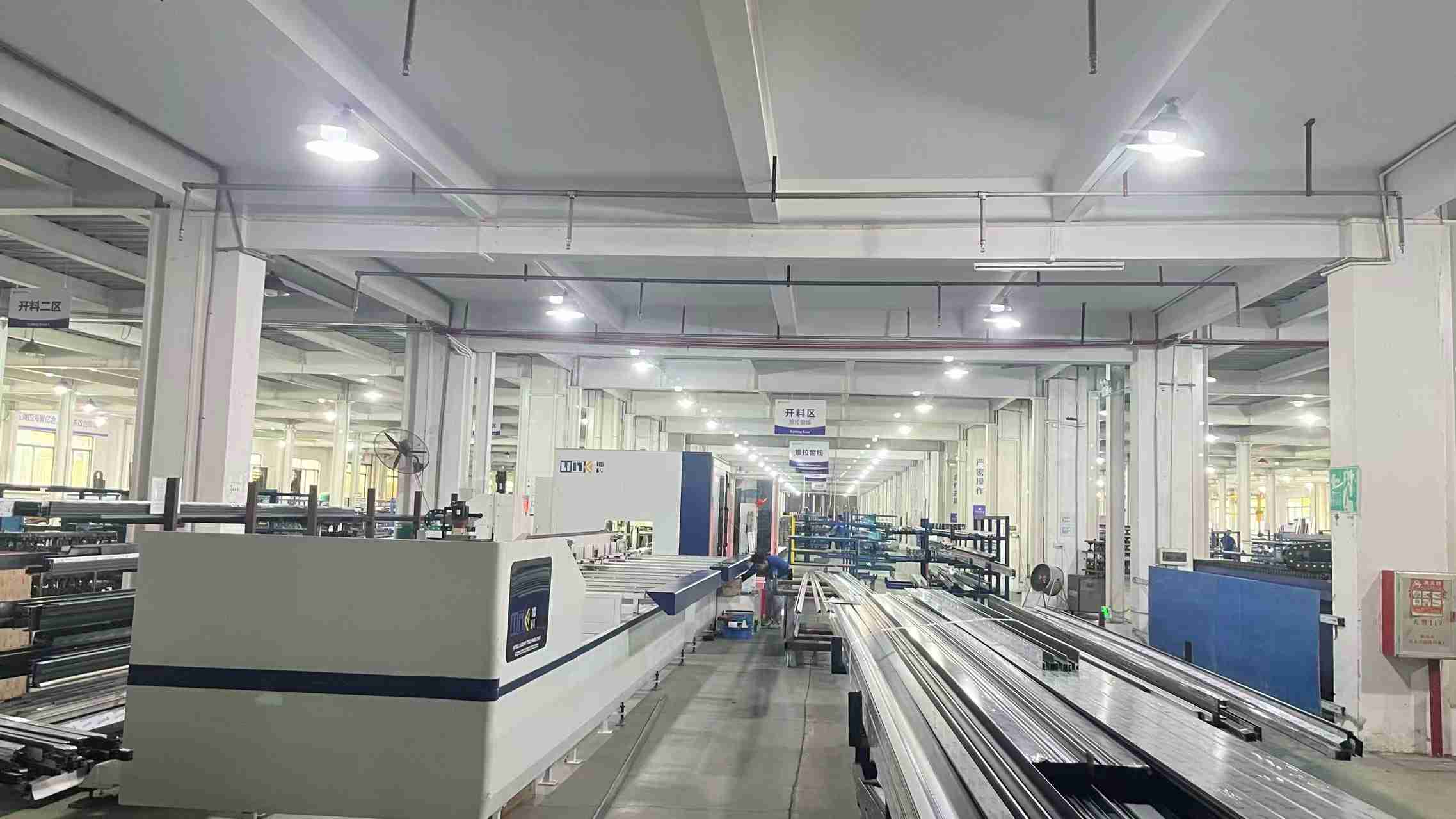 Cutting Machine
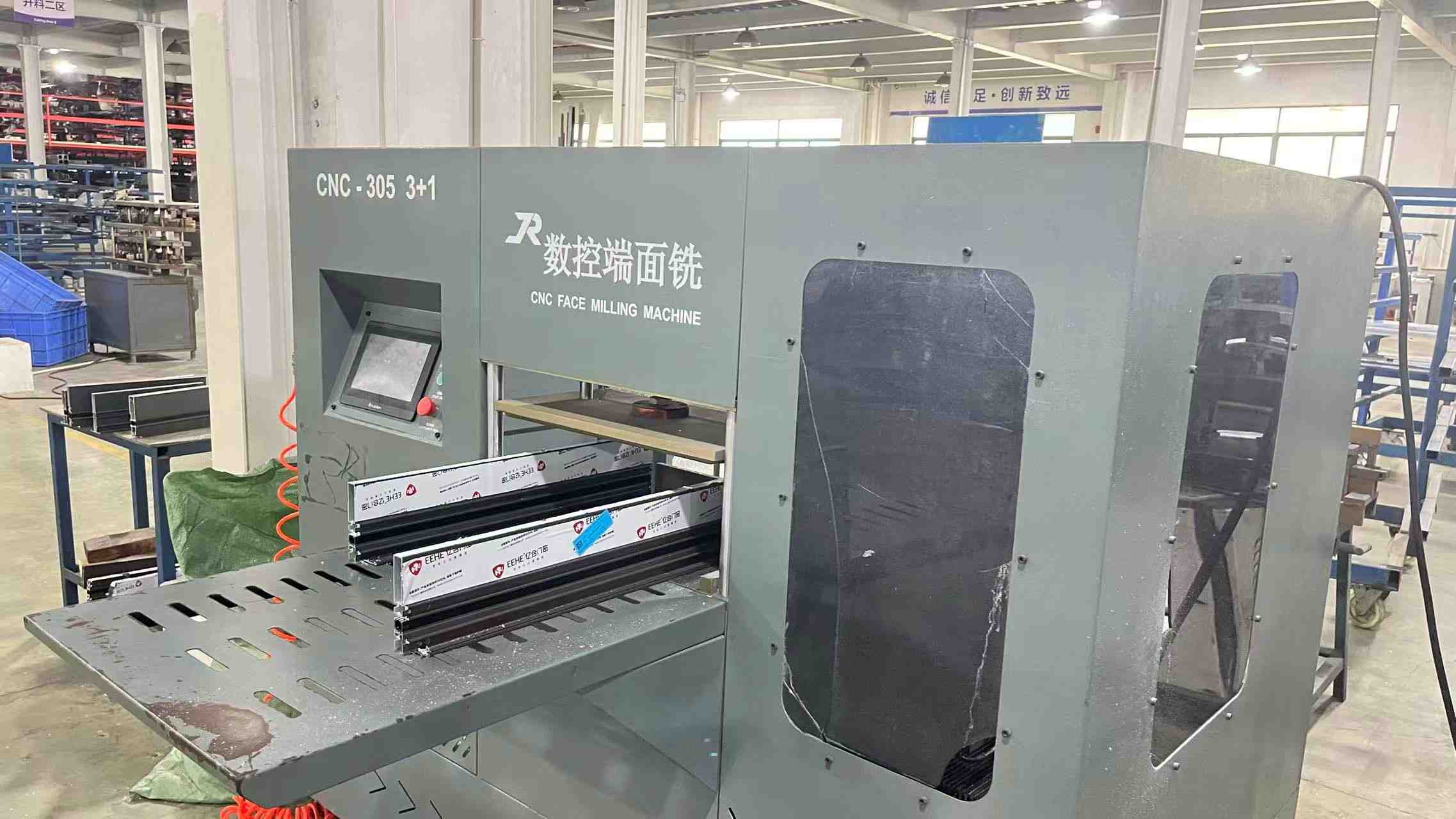 Milling Machine
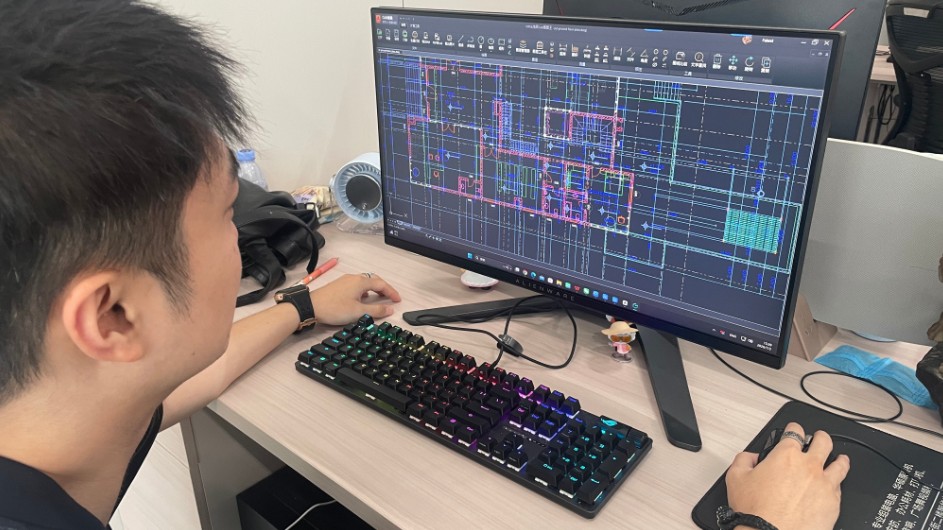 Design with CAD
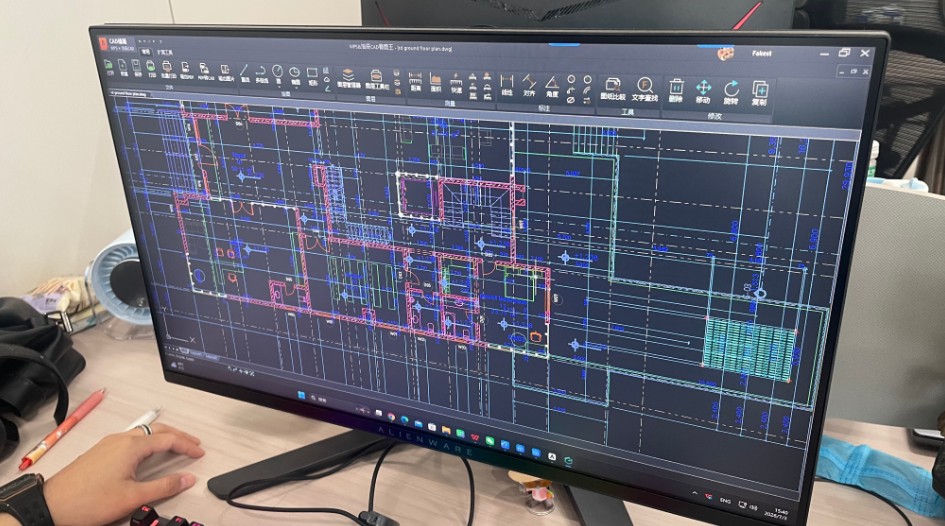 Design with Computer
Architectural fenestration design requires balancing thermal insulation, structural rigidity, and long-term environmental degradation resistance.
Aluminum is inherently a high thermal conductor. To achieve ultra-low U-factors required by North American and European codes, our doors utilize 24mm to 34mm multi-cavity Polyamide PA66 reinforced with 25% glass fiber (PA66-GF25). This structure breaks thermal bridging while matching the thermal expansion coefficient of aluminum frames to prevent seal failure.
Exposed seaside or harsh climate installations demand superior surface protection. We deploy 3-coat fluorocarbon PVDF coatings (complying with AAMA 2605 specifications) and advanced powder coating systems. Tested through 3,000+ hours of continuous salt spray exposure, our finishes resist chalking, UV degradation, and coastal salt corrosion.
Our aluminum residential doors incorporate double or triple-glazed insulated glass units (IGU) featuring SentryGlas® (SGP) or PVB interlayers. Combined with double Low-E soft-coat technology and argon gas filling, our glazing units block up to 99% of UV radiation while optimizing Solar Heat Gain Coefficients (SHGC).
Engineered solutions tailored to regional environmental stress profiles and local structural codes.
Challenge: Extreme wind velocities exceeding 170 mph and airborne windborne debris.
Solution: Heavy-duty Miami-Dade NOA certified slim sliding doors with reinforced sub-frames, continuous stainless steel hinges, and SGP laminated impact glass designed to sustain dynamic pressure cycles (TAS 201/202/203).
Challenge: Extreme freezing temperatures requiring zero thermal loss.
Solution: Triple-glazed thermal break casement doors and tilt-and-turn windows featuring multi-point perimeter EPDM gaskets, achieving U-factors as low as 0.78 W/m²K to cut heating consumption.
Challenge: High ambient city noise pollution (traffic, light rail, airport zones).
Solution: Sound-insulated awning and sliding windows with asymmetric glass pane thickness (e.g., 6mm + 12Ar + 8mm) achieving Sound Transmission Class (STC) ratings above 42 dB.
Challenge: Intense thermal radiation, sandstorms, and demand for panoramic openings.
Solution: Oversized lift-and-slide aluminum doors with motorized drive systems, reflective tinting, and concealed tracks designed to seal out fine dust particles and extreme heat.
Direct comparison of key structural, acoustic, and thermal metrics across product categories.
| System Category | Thermal Transmittance (U-Factor) | Acoustic Rating (STC / Rw) | Wind Load Resistance | Compliance Standards | Ideal Application |
|---|---|---|---|---|---|
| Thermal Break Lift & Slide Door | 1.2 - 1.6 W/m²K | 38 - 42 dB | Up to ±4500 Pa | NFRC / CE / AS2047 | Luxury Villa Patios, Penthouse Terraces |
| HVHZ Hurricane Impact Slim Door | 1.8 - 2.2 W/m²K | 36 - 40 dB | Up to ±9000 Pa | Miami-Dade NOA / Florida Building Code | Coastal Resorts, High-Rise Oceanfront |
| Tilt & Turn Soundproof Casement | 0.8 - 1.3 W/m²K | 42 - 48 dB | Up to ±5500 Pa | AS2047 / EN 14351-1 | Urban Residential, Hotel Suites |
| Insulated Commercial Folding Door | 1.4 - 1.8 W/m²K | 35 - 38 dB | Up to ±3800 Pa | NFRC / CE Certified | Commercial Shopfronts, Villa Openings |
| Heavy-Duty Aluminum Entry Front Door | 1.1 - 1.5 W/m²K | 40 - 45 dB | Up to ±6000 Pa | Ballistic & Security Tested | Main Residential Entrances, Executive Villa |
How concentrated industrial clusters enable rapid prototyping, scale economies, and resilient lead times.
The global construction sector faces persistent challenges including material inflation, unpredictable freight schedules, and tight project deadlines. China’s aluminum fenestration supply chain offers unmatched resilience through industrial clustering—where raw bauxite refining, precision alloy extrusion, hardware manufacturing (such as German-designed Siegenia, Hoppe, or top-tier domestic GU hardware), and glass fabrication exist within a 50-kilometer radius.
From raw aluminum ingot casting to 5-axis CNC profile milling and automated IGUs unit assembly, vertical integration eliminates middleman margins and guarantees batch-to-batch structural consistency.
Backed by 75 dedicated R&D engineers, customized shop drawings (CAD/BIM) are finalized within 48 hours, with rapid prototype physical samples produced in under 10 business days.
Our 50-person QC unit enforces mandatory 3-stage audits: raw extrusion wall thickness verification (minimum 2.0mm for doors), corner crimping strength tests, and complete pre-shipment mock-up assembly.
Seamless regulatory approval across key international export jurisdictions.
Compliance with NFRC 100/200 thermal ratings ensures low U-factors and Solar Heat Gain Coefficients. For coastal storm regions, products pass TAS 201 (large missile impact), TAS 202 (uniform static air pressure), and TAS 203 (cyclic wind pressure loading).
Certified under AS2047 for deflection, air infiltration, water penetration resistance (up to 700 Pa), and ultimate strength tests. Glazing complies with safety glass requirements of AS1288.
Full CE marking compliance addressing dangerous substances, load-bearing capacity of safety devices, acoustic performance, thermal transmittance, and air permeability (Class 4 rating).
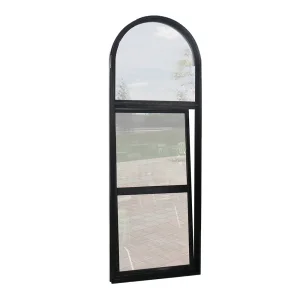
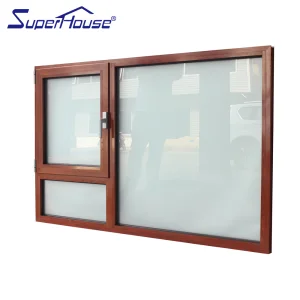
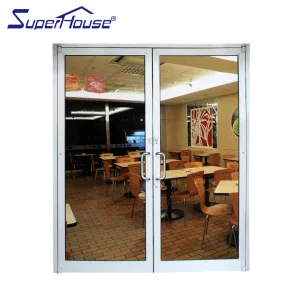
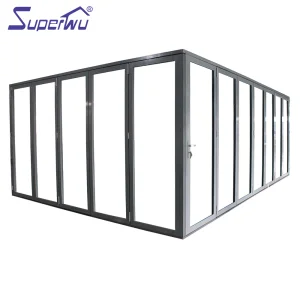
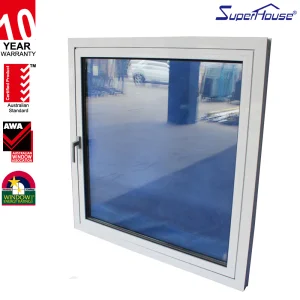
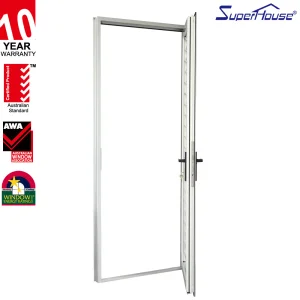
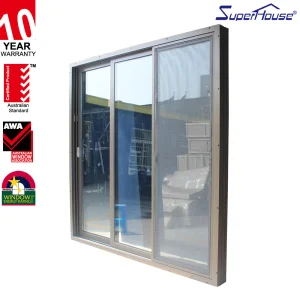
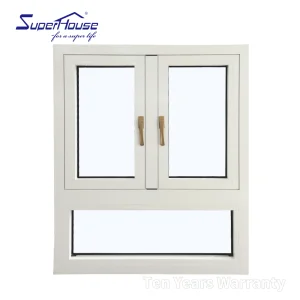
Specialized architectural entry solutions, folding systems, and seaside weather-proof fenestration.
Addressing structural engineering, regulatory certification, packaging logistics, and custom OEM inquiries.
 Steelwar