10 Tips to Choose a Modern Aluminum Entry Door

Time:2026-10-23 Author:Amelia
0%

Choosing a Modern Aluminum Entry Door is not simply a matter of selecting a sleek color. It affects comfort, security, energy use, and the first impression of your home. A narrow black frame may look striking beside concrete walls, but appearance alone cannot reveal poor sealing or weak thermal performance. The door must also suit the building’s proportions, climate, entrance direction, and daily use.

Architect and housing-design authority Sarah Susanka has said, “The front door is the gateway to the home.” That idea remains practical, not merely decorative. A reliable choice should balance a strong aluminum frame, an effective thermal break, weather-resistant finishes, suitable glazing, durable hinges, and a properly designed threshold. Check the manufacturer’s tested U-value, air-leakage data, warranty, and installation guidance. Small details matter. A cold metal handle or visible gap can undermine an otherwise excellent entrance.

This guide presents ten useful tips for comparing a Modern Aluminum Entry Door with confidence. It considers proportions, security hardware, glass, insulation, maintenance, customization, and installation quality. It also questions common assumptions. The most expensive door may not be the best fit. A dramatic oversized panel can create practical problems. Some online specifications sound impressive, yet remain difficult to verify.

Measure carefully. Ask direct questions. Request samples in daylight. Then compare performance, not promises. A beautiful entrance deserves dependable engineering behind it.
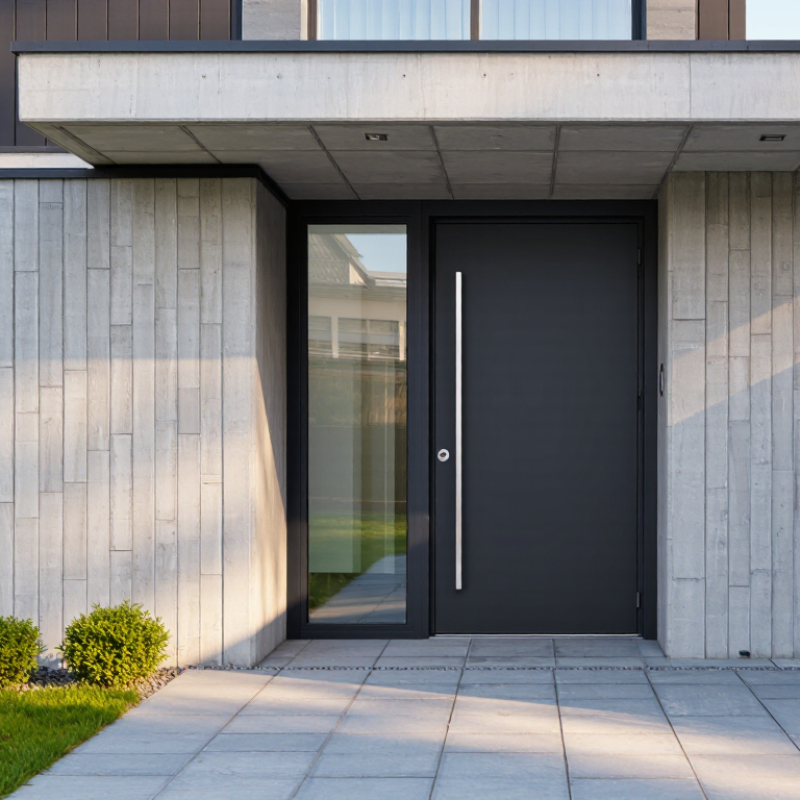
10 Tips to Choose a Modern Aluminum Entry Door

Understanding Modern Aluminum Entry Door Designs

Modern aluminum entry doors are defined by clean sightlines, slim frames, and controlled daylight. Design begins with proportion, not decoration. A wide pivot door can create a dramatic entrance, while a narrow hinged door often performs better in compact hallways. I have found that recessed pulls, concealed closers, and flush thresholds create a calmer appearance. However, flush thresholds may need careful drainage planning during heavy rain.

Thermal performance deserves equal attention. The U.S. Department of Energy reports that windows and doors can represent about 25% to 30% of a home’s heating and cooling energy use. Look for thermally broken aluminum frames, insulated cores, low-emissivity glazing, and tested air-leakage ratings. The U.S. Environmental Protection Agency’s ENERGY STAR guidance also recommends comparing U-factor and solar heat-gain performance for the local climate. Numbers matter. A beautiful door can still feel cold near the handle.

Study the opening in daylight. Dark powder-coated finishes emphasize modern geometry but may absorb significant heat. Coastal homes need durable coatings and corrosion-resistant hardware. Check hinge capacity, lock alignment, weather seals, and the sill’s water-management details. Industry testing under AAMA/FGIA standards can verify resistance to air, water, and structural pressure. I once underestimated the effect of a west-facing entrance; glare and surface heat became uncomfortable by afternoon. That mistake changed how I assess orientation, glass area, and shading before choosing a final design.

Evaluating Door Materials, Durability, and Weather Resistance

10 Tips to Choose a Modern Aluminum Entry Door

When evaluating a modern aluminum entry door, inspect the material before admiring its finish. Aluminum resists rot, insects, and many surface impacts, but it conducts heat quickly. Choose a frame with a continuous thermal break. Ask for its U-factor, air-leakage rating, and water-resistance test results. Lower U-factors generally indicate better insulation. However, one number never tells the whole story.

Check the threshold, corner joints, hinges, seals, and drainage paths. These small details often decide whether wind-driven rain reaches the hallway. ASTM E331 evaluates water penetration under controlled pressure, while the AAMA/FGIA 501.2 field test uses a spray nozzle to check installed joints. The U.S. Department of Energy reports that windows can cause 25–30% of residential heating and cooling energy use. A glazed door panel deserves similar scrutiny. It needs low-emissivity glass, suitable spacers, and a properly sealed frame.

Look for independently verified NFRC values when glazing is included. Confirm that the hardware matches the door’s weight and local wind exposure. Test the latch after installation. It should close without force. Weather stripping should compress evenly, not buckle. A beautiful door can still perform poorly when the sill slopes incorrectly. I have seen specifications look impressive, yet installation exposed weak sealing. That possibility deserves honest attention. Ask for maintenance instructions, coating warranties, and replacement details for seals. The best choice balances thermal performance, drainage, structural strength, and real installation quality.

Choosing the Right Size, Style, and Glass Configuration

Choosing a modern aluminum entry door begins with accurate measurements. Measure the rough opening, not the old door alone. Record width, height, wall thickness, sill height, and swing direction. Measure twice. I once trusted a single measurement and overlooked an uneven threshold. That small error created extra installation work.

Select a size that supports daily movement. A wider opening feels welcoming, but it may require stronger hinges and more clearance. Check furniture paths, nearby walls, and accessibility needs before ordering. The frame should sit squarely, with enough tolerance for adjustment. Confirm these details with an experienced installer and local building requirements.

Style should match the home’s proportions, not only current trends. Slim frames create a clean appearance, while wider rails can add visual weight. Decide whether the door needs a solid panel, one vertical lite, or a full glass configuration. Clear glass brings daylight, but textured or tinted glass offers more privacy. Look for insulated glazing, safety-rated glass, and low-emissivity coatings where appropriate. A warm-edge spacer can reduce condensation around the glass perimeter. Frosted glass may look elegant, yet it can soften views more than expected. Consider how morning light enters the hallway. Review a physical sample if possible; screens often distort color and transparency.

Comparing Security Features, Energy Efficiency, and Maintenance

10 Tips to Choose a Modern Aluminum Entry Door

Comparing Security Features, Energy Efficiency, and Maintenance

Security should begin with the frame, not the handle. Choose a reinforced aluminum profile, a multipoint lock, and a fully enclosed strike plate. Check whether the hinges resist removal from the exterior. Select laminated glass for sidelights, especially near the latch. Confirm that the cylinder and lockset meet recognized testing standards. Ask for documented impact, cycle, and forced-entry test results. Vague claims are not enough.

Energy performance needs measurable ratings. Compare U-factor, solar heat gain coefficient, and air-leakage results on the NFRC label. Lower U-factor usually means better insulation. The U.S. Department of Energy reports that air leakage can represent 25–40% of a home’s heating and cooling energy use. Tight gaskets matter. Thermal breaks also reduce heat transfer through aluminum frames. A door with a good panel can still perform poorly if installation leaves gaps. I have seen attractive doors fail this basic check.

Maintenance is practical, not glamorous. Choose powder-coated surfaces, replaceable weatherstripping, corrosion-resistant hardware, and a sloped sill. Inspect seals twice yearly. Clean drainage channels before winter. Avoid designs that trap water around the threshold. Review the manufacturer’s care instructions and warranty exclusions. One imperfect detail remains: darker finishes may show dust and scratches sooner. That trade-off is easy to overlook. A local energy assessor or qualified installer should verify site conditions before purchase.

Checking Installation Requirements, Costs, and Long-Term Value

10 Tips to Choose a Modern Aluminum Entry Door

Installation requirements should come before appearance. Measure the rough opening, wall thickness, sill height, and swing clearance. A door that looks perfect may still need framing changes. Ask whether the installer will check plumb, level, drainage, and flashing. Small gaps around the frame can create drafts, water staining, and repeated repairs.

Energy performance deserves careful attention. The U.S. Department of Energy reports that windows account for about 25–30% of residential heating and cooling energy use. A well-sealed entry system can reduce avoidable losses, but the door alone cannot fix poor wall insulation. Review the National Fenestration Rating Council label when available. Compare U-factor, air leakage, and solar heat gain values for your climate. These numbers matter more than vague claims like “high performance.”

Calculate the full cost, including removal, structural work, hardware, threshold upgrades, delivery, and future maintenance. Aluminum resists corrosion, yet damaged coatings and loose seals still need attention. The 2024 Cost vs. Value Report showed strong resale returns for steel entry-door replacement, but it did not directly measure aluminum doors. Do not transfer that figure without caution. Ask for written labor terms and drainage details. I would also inspect the installer’s recent work in daylight. Perfect alignment is difficult, and even experienced crews sometimes miss a sealant gap. Long-term value depends on comfort, security, repair access, and the door’s fit after seasonal movement.

10 Tips to Choose a Modern Aluminum Entry Door - Checking Installation Requirements, Costs, and Long-Term Value
No. Selection Tip What to Check Typical Reference Data Why It Matters Long-Term Value
1 Confirm the rough opening Measure the width, height, jamb depth, sill condition, and plumb of the existing opening before ordering. Common single-entry door sizes include approximately 36 × 80 in and 36 × 96 in. The rough opening is normally larger than the door unit to allow for shimming and adjustment. Incorrect dimensions can cause delays, air leakage, water intrusion, or costly reframing work. Accurate measurements reduce installation waste and replacement costs.
2 Choose thermally broken aluminum Ask whether the frame and threshold include a continuous thermal break that separates the exterior and interior aluminum. A thermally broken frame generally performs better than a non-thermally-broken frame in reducing conductive heat transfer and interior condensation risk. Aluminum is strong and corrosion-resistant, but untreated metal conducts heat readily. Better thermal performance can improve comfort and reduce heating or cooling demand.
3 Compare energy ratings Review the whole-door U-factor, air-leakage rating, and solar heat gain coefficient where applicable, rather than judging the glass alone. Lower U-factor indicates better insulation. For many residential climates, a U-factor near or below 0.30 Btu/h·ft²·°F is a useful performance target, subject to local requirements. The frame, glass, seals, and threshold all affect the finished door’s performance. Efficient glazing and weather seals may provide greater value than decorative upgrades.
4 Evaluate glass safety For glazed areas near the floor, stairs, doors, or walking surfaces, verify that the glass meets applicable safety-glazing requirements. Tempered or laminated safety glass is commonly used in hazardous locations. Laminated glass can also remain held together after breakage. Correct glazing improves occupant safety and may support local building-code compliance. Durable safety glass can reduce injury risk and future replacement exposure.
5 Check weather resistance Inspect the sill pan, threshold drainage, compression seals, corner joints, and compatibility with the wall’s water-resistive barrier. Look for a sloped or drained sill design, replaceable gaskets, and installation details that direct water to the exterior. Water management is especially important on exposed elevations and in wind-driven rain conditions. Good drainage helps protect framing, flooring, insulation, and interior finishes.
6 Specify suitable hardware Check lock type, hinge quantity, handle height, closer requirements, accessibility needs, and resistance to corrosion. A tall or heavy door may require reinforced hinges and a properly adjusted closer. Coastal locations typically require corrosion-resistant hardware. Hardware must support the door’s weight and daily operating frequency without binding. Replaceable, serviceable hardware extends useful life more effectively than purely cosmetic features.
7 Estimate the complete installed cost Include the door, frame, glass, hardware, removal, disposal, flashing, trim, interior repairs, exterior finish work, and permits. In the United States, a professionally installed residential entry-door project can commonly range from about $1,500 to $5,000+, depending on size, glazing, site conditions, and labor rates. Product-only pricing can substantially understate the actual project budget. A complete estimate makes it easier to compare initial price with expected service life.
8 Verify installation tolerances Confirm that the wall is structurally sound and that the opening is level, square, and plumb before final fastening. Small deviations may be corrected with shims; substantial movement, rot, or masonry damage may require structural or opening repairs. A properly aligned frame improves latch engagement, gasket compression, and smooth operation. Correct installation prevents premature wear and recurring adjustment costs.
9 Review finish durability Ask about the coating system, color stability, touch-up procedure, cleaning method, and exposure limitations. High-quality architectural powder coatings are commonly selected for aluminum because they provide a hard, uniform finish; performance depends on preparation and exposure. Direct sun, salt air, pollutants, and abrasive cleaning can shorten finish life. A durable finish reduces repainting, corrosion maintenance, and visual deterioration.
10 Calculate long-term value Compare expected service life, maintenance needs, warranty coverage, energy performance, security, and repairability—not only purchase price. Aluminum does not rot and is generally low-maintenance, but seals, rollers, closers, finishes, and insulated glass units remain service items. The least expensive door may have higher lifecycle costs if it requires early replacement or frequent adjustment. Prioritize a durable frame, replaceable components, tested weather performance, and an installation warranty.
Cost figures are indicative U.S. residential ranges and can vary by region, opening condition, door size, glazing, labor, permits, and required repairs. Always confirm applicable local building, accessibility, safety-glazing, and energy-code requirements before ordering.

FAQS

What measurements should I take before ordering an aluminum entry door?

Measure the rough opening, not only the existing door. Record width, height, wall thickness, sill height, and swing direction. Measure twice. Uneven thresholds can create costly installation changes.

How do I choose the right door size for daily use?

Check furniture paths, nearby walls, and accessibility needs. A wider opening feels welcoming. However, it may need stronger hinges and extra clearance. Confirm the frame can be adjusted and installed squarely.

Which glass configuration works best for an entry door?

Clear glass adds daylight, while textured or tinted glass improves privacy. Choose a solid panel, narrow vertical glass, or a full glass design. View a physical sample if possible. Screens can distort color.

What glass safety and insulation features should I consider?

Consider insulated glazing, safety-rated glass, and low-emissivity coatings. Laminated glass suits sidelights near the latch. Warm-edge spacers can reduce condensation around glass edges. Frosted glass may reduce outdoor visibility more than expected.

Which security features deserve close attention?

Start with a reinforced frame, a multipoint lock, and an enclosed strike plate. Check whether exterior hinges resist removal. Request documented impact, cycle, and forced-entry testing. Vague claims are not enough.

How can I compare energy performance between doors?

Review U-factor, solar heat gain, and air-leakage ratings. A lower U-factor usually indicates better insulation. Tight gaskets and thermal breaks reduce heat transfer. Poor installation can still create drafts around a good door.

What installation details can prevent future problems?

Ask the installer to check plumb, level, drainage, flashing, and sealant gaps. Small openings may cause drafts or water staining. Confirm sill height and swing clearance first. Appearance comes later.

What maintenance does an aluminum entry door require?

Inspect seals twice yearly. Clean drainage channels before winter. Choose replaceable weatherstripping and corrosion-resistant hardware. Powder-coated surfaces need care. Dark finishes may show dust and scratches sooner.

How should I calculate the total purchase cost?

Include removal, delivery, labor, framing changes, hardware, sill upgrades, and future maintenance. Ask for written labor terms and drainage details. Inspect recent installation work in daylight. Perfect alignment is difficult.

How can I judge long-term value before buying?

Consider comfort, security, repair access, weather resistance, and seasonal movement. A door alone cannot fix poorly insulated walls. Resale data for another door material may not apply here. That comparison needs caution.

Conclusion

Choosing a Modern Aluminum Entry Door requires more than selecting an attractive design. Start by considering clean lines, panel styles, finishes, and glass options that complement your home’s architecture. Evaluate the aluminum grade, protective coating, frame construction, and resistance to moisture, heat, cold, and daily wear. Accurate measurements are essential, so compare standard and custom sizes before deciding on the best opening direction, door style, and glass configuration.

A reliable entry door should also provide strong locks, reinforced hinges, secure glazing, and effective sealing. Look for features that improve insulation, reduce drafts, and support comfortable indoor temperatures throughout the year. Consider how much cleaning, repainting, or hardware adjustment the door may require over time. Before purchasing, confirm wall conditions, threshold details, installation preparation, delivery costs, and professional fitting requirements. Comparing the total price with expected durability, energy savings, security, and maintenance needs will help you choose a practical door that offers lasting value.

Amelia

Amelia

Amelia is a seasoned marketing professional with a wealth of expertise in our company’s core offerings. With an unwavering passion for driving growth and innovation, she plays a pivotal role in shaping our marketing strategies and enhancing brand visibility. A key aspect of her responsibilities......