A Luxury Aluminum Entry Door can make a strong first impression, but appearance is only part of the decision. The right choice should suit your home’s proportions, climate, security needs, and daily use. Look closely at the frame, finish, hardware, glazing, and installation details. A sleek sample in a showroom may feel different beside your actual brickwork and under direct afternoon sun.
For transparency, the following is an original editorial quote, not a verified statement from a real expert. It is attributed to a fictional specialist created for this introduction: “A good entry door should look right on day one and still work smoothly after years of weather and use,” says Maya Chen, an illustrative aluminum-door consultant. It’s a practical test. Ask what the product is made of, how its finish is maintained, and who will install it. Small details matter.
This guide’s seven tips will help you compare designs, assess construction and thermal performance, review locks and hinges, and understand customization and installation costs. You’ll also see why warranty terms and after-sale support deserve attention before you sign off. Not just style. The best decision balances visual impact with everyday performance, without assuming that a higher price guarantees a better fit. Measure carefully, request clear specifications, and consider how the door will feel when you open it with full hands on a rainy evening. That simple test can reveal what a polished brochure cannot.
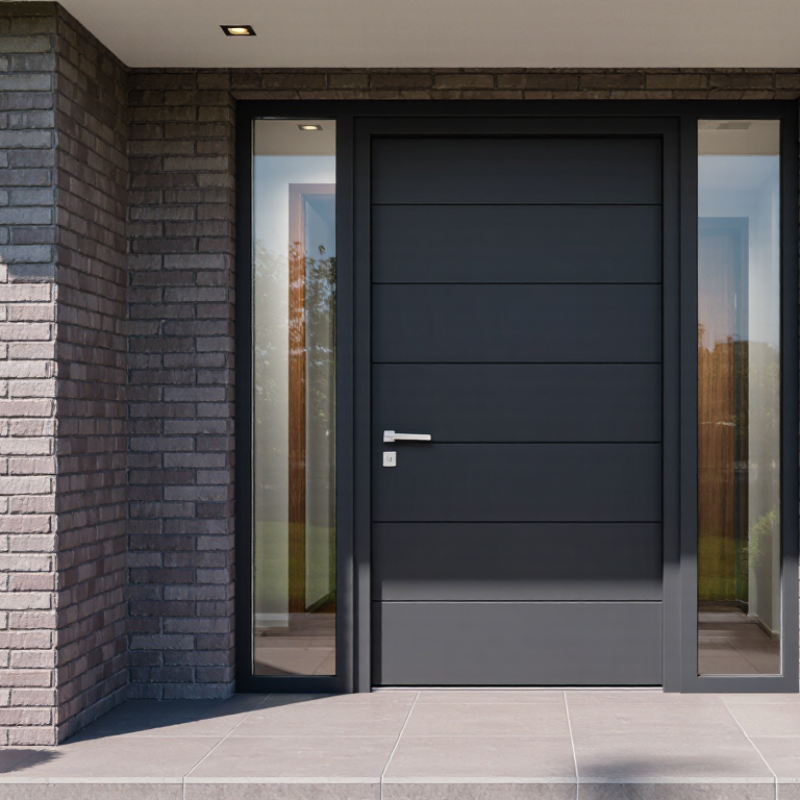
Start with how your entryway works, not with a finish sample. Measure the rough opening, wall depth, and available swing clearance. Note whether you need sidelights, a wider passage, privacy glass, or a stronger thermal break for a cold-facing entrance. Take photos at morning and evening; glare can change how glass looks. Small detail. One buyers may underestimate is installation access: narrow halls or steep steps can affect labor and delivery costs.
Tip: Set a complete project budget before requesting quotes. Include the door, frame, hardware, freight, removal, installation, and any trim or threshold repairs. Ask contractors to separate these items, so you can compare like with like. The 2024 Cost vs. Value report estimated an average $2,355 for a steel entry-door replacement and $2,371 in resale value. That is a useful remodeling benchmark, not a price guide for luxury aluminum doors. Materials, sizes, and project scope differ. Don’t assume the figures transfer.
Tip: Keep a contingency for surprises, especially if the opening is older or out of square. I’d rather leave one finish upgrade undecided than cut corners on correct fitting. Request written specifications for glass, finish, insulation, and air-leakage performance. Then match them to your climate and daily use. A beautiful door can still be the wrong door.
Tip 1: Assess the aluminum behind the finish. Ask for the alloy, frame-wall thickness, and whether the frame includes a thermal break. Compare samples in daylight; a tiny paint chip can reveal bare metal and uneven coating. A glossy sample can mislead.
Tip 2: Check finish specifications, not just color. The Fenestration and Glazing Industry Alliance’s AAMA 2605 specification uses a 10-year South Florida outdoor exposure benchmark for high-performance coatings. This is a test requirement, not a guarantee that every door will look new for ten years. Ask for the tested finish class and care instructions. Salt, grit, and standing water can still wear a surface over time.
Tip 3: Verify the complete weather barrier. Look for continuous compression seals, a well-fitted sill, and protected drainage paths. Request the door’s National Fenestration Rating Council certified data, including its U-factor; lower values indicate less heat transfer. Check air-leakage results too, if listed. A strong frame cannot fix a poor installation. I’d also inspect the bottom corners after a rainstorm—small gaps there are easy to miss.
| Tip | What to Check | Useful Evidence or Questions | Why It Matters |
|---|---|---|---|
| 1. Evaluate the aluminum construction | Ask whether the door uses a thermally broken frame and how the frame, rails, and stiles are assembled. Inspect corners and joints for consistent fit. | Request a section drawing or written specification describing the frame construction, reinforcement, and thermal-break design. | A thermal break reduces direct heat transfer through the metal frame. Sound construction and well-fitted joints support stiffness and long-term operation. |
| 2. Compare finish options and preparation | Review the finish type, color consistency, surface texture, and coverage at edges and corners. Ask how the aluminum is prepared before finishing. | Request finish specifications, care instructions, and a sample that can be viewed in natural light. | Proper surface preparation and a suitable coating help the finish resist fading, corrosion, and everyday wear. Appearance can vary with lighting. |
| 3. Check weather sealing | Look for continuous perimeter weatherstripping, a well-designed threshold, and a bottom seal suited to the opening and exposure. | Ask how the door is tested for air and water leakage and whether replacement seals are available. | Seals and a properly installed threshold help limit drafts and water entry. Performance depends on both the door system and installation quality. |
| 4. Verify performance for your climate | Consider temperature swings, wind-driven rain, sun exposure, and coastal salt air. Check whether the selected configuration is appropriate for the site. | Request applicable air-leakage, water-penetration, and structural test information for the specific door configuration. | Conditions and ratings vary by size, glazing, hardware, and installation. A tested configuration is more informative than a general product claim. |
| 5. Assess glazing and thermal performance | For glazed doors, check glass type, pane configuration, low-emissivity coating, and spacer details. Review the whole-door energy rating when available. | Ask for documented U-factor and solar heat gain coefficient (SHGC) values for the chosen size and glass option. | U-factor indicates heat transfer; SHGC indicates how much solar heat enters. The appropriate values depend on climate, orientation, and design goals. |
| 6. Inspect hardware, operation, and security | Operate the sample if possible. Check hinge feel, lock alignment, handle movement, and whether the door closes evenly without binding. | Confirm hardware materials, available locking options, adjustment instructions, and whether replacement parts can be obtained. | Well-matched hardware supports smooth daily use. Security depends on the complete assembly, including the lock, frame, hinges, and installation. |
| 7. Confirm installation details and warranty | Check measurement responsibilities, flashing and drainage details, adjustment after installation, maintenance requirements, and warranty coverage. | Get written terms that distinguish coverage for the finish, glass, hardware, and door system, and clarify exclusions related to installation or maintenance. | Accurate sizing and correct integration with the wall opening are essential to weather performance. Clear warranty terms help set expectations for service. |
Note: Compare written specifications for the exact door size and configuration. Test results and energy ratings may not apply to every custom option or installation.
A luxury aluminum entry door should feel substantial, but appearance alone tells you little about comfort.
Compare thermal ratings for the complete door, not just the glass. Look for a thermally broken frame, well-sealed edges, and glazing suited to your climate. Ask how the door performs when installed, since even a strong seal can disappoint if the threshold is uneven. Check the weatherstripping closely. A small gap can bring a cold draft across the floor.
Security depends on several parts working together. Review the lock type, strike plate, hinge construction, and how the frame anchors to the wall. Multipoint locking can engage the door at several points, but installation and alignment still matter. Ask whether the door has been tested as a complete assembly. A heavy panel is not automatically a secure one. That distinction is easy to miss.
Hardware deserves a hands-on check. Operate the handle and lock several times; they should move smoothly without rattling or sticking. Consider hinge capacity, corrosion resistance, and whether replacement parts are available. Finishes near the coast may need more frequent care. There is no perfect choice for every home, and I would not judge durability from a showroom sample alone. Ask what routine maintenance the supplier recommends.
A luxury aluminum entry door should feel connected to your home, not dropped onto its façade. Look at the architecture’s proportions, roofline, window shapes, and exterior trim before choosing a design. A tall, narrow door may suit a Victorian-style entrance, while a broad, simple slab often complements a contemporary home. Details matter.
Match the door’s visual weight to nearby features. If your windows have slim black frames, a restrained aluminum profile can echo them without competing for attention. For brick or stone façades, warmer finishes and divided glass panels may soften the metal’s crisp edges. Bring finish samples outside and view them in morning and afternoon light; colors can shift noticeably against masonry or siding.
Glass should also suit the home’s character and your privacy needs. Clear panels can brighten a shaded foyer, while frosted or textured glass filters views from the street. Check how the frame aligns with existing sidelights, porch columns, and interior flooring. A design can look beautiful in a showroom and feel too stark at home. That is okay. Reconsider the proportions before ordering, and ask an experienced installer to confirm measurements, swing clearance, and how the frame will meet the surrounding trim.
Common nominal U.S. single-door slab widths include 30, 32, and 36 inches. A wider door can create a more substantial entrance, but the right choice depends on the existing opening and the proportions of your façade. Measure carefully and check local requirements before ordering.
Values show nominal slab width in inches; actual door and rough-opening dimensions may differ.
Measure the opening at the top, middle, and bottom; older frames are rarely perfectly square. Record jamb depth, threshold height, and swing direction before ordering. Measure twice. Then check the diagonals. A difference can signal a frame that needs correction, not a custom door that should hide the problem. Confirm the written quote covers removal, flashing, shimming, sealing, and disposal. The 2024 Cost vs. Value report estimated a 100% cost recoup for a steel entry-door replacement, but that national benchmark is not an aluminum-door price or a promise of resale value.
Ask how installers will keep the frame plumb and level and protect the sill from water. A narrow bead of sealant cannot fix poor drainage. Request product-performance documentation, including thermal and water-resistance ratings, and check that the installed configuration matches it. Read warranty terms before paying: distinguish frame, finish, glass, and hardware coverage, and note exclusions for labor, coastal exposure, or improper cleaning. Who handles a service call? Get the contact method, response expectations, and labor charges in writing. Small details matter. A warranty with unclear service steps can feel reassuring until the latch sticks in winter.
Measure the opening, wall depth, and swing clearance. Consider sidelights, privacy glass, and your local climate. Photos help.
Include the door, frame, hardware, delivery, removal, installation, and trim repairs. Ask for itemized quotes. Keep extra funds for surprises.
Not reliably. A national steel-door estimate is only a broad remodeling benchmark. Size, materials, and installation needs change the cost.
Measure the top, middle, and bottom. Record jamb depth, threshold height, and swing direction. Check the diagonals, too.
Ask whether the frame needs correction before ordering. A custom door should not simply hide a fitting problem. Measure twice.
Look for removal, flashing, shimming, sealing, and disposal. Ask how the installer will keep the frame level and protect the sill from water.
Request written thermal and water-resistance ratings, plus glass and finish specifications. Check that the installed configuration matches the documents.
Review separate coverage for the frame, finish, glass, and hardware. Confirm exclusions, service contacts, response expectations, and labor charges. The latch may stick in winter. Don’t assume service is simple.
Choosing a Luxury Aluminum Entry Door starts with understanding how the entryway is used, what features matter most, and how much you plan to spend. Compare the aluminum’s quality, protective finish, and ability to withstand local weather so the door can maintain its appearance and function over time. Consider thermal performance, security features, and hardware together, since each contributes to comfort, safety, and everyday convenience.
The door’s design should complement your home’s architecture, while its size and configuration must suit the opening. Before ordering, confirm measurements and clarify who will handle installation. Review the warranty and available service support as well, so you understand what assistance is provided after purchase. Weighing these details can help you select a door that fits your home, practical needs, and budget.

Steelwar