Choosing the best Aluminum Front Door is not simply a matter of selecting the thickest frame or brightest finish. Performance depends on climate, installation quality, thermal breaks, glazing, security hardware, and daily use.
The U.S. Department of Energy advises comparing door and glazing products through U-factor, solar heat-gain coefficient, air leakage, and visible transmittance. These measurements reveal more than appearance. A low U-factor can reduce heat transfer, while suitable weatherstripping limits drafts around the threshold. The Fenestration and Glazing Industry Alliance also emphasizes tested performance under NAFS standards, including resistance to wind, water, and forced operation.
Small details matter.
Building scientist Joseph Lstiburek often explains, “The perfect wall is a wall that keeps the water out.” His principle applies directly to an Aluminum Front Door. A beautifully finished panel still fails when the sill slopes inward, the flashing is incomplete, or the frame bridges indoor and outdoor temperatures. That is where many buying guides become too optimistic.
Market reports from Grand View Research and Fortune Business Insights show continued growth in the global doors and windows sector, driven by renovation, energy efficiency, and modern architectural design. However, broad market growth does not identify the right door for your home. It only shows demand.
The best choice may be a thermally broken aluminum system with insulated glass, durable powder coating, adjustable hinges, and professionally sealed installation. Yet even this recommendation needs reflection. Coastal salt, harsh sunlight, snow, and frequent family traffic can change the result. In this guide, we compare those practical differences before naming the strongest overall option.
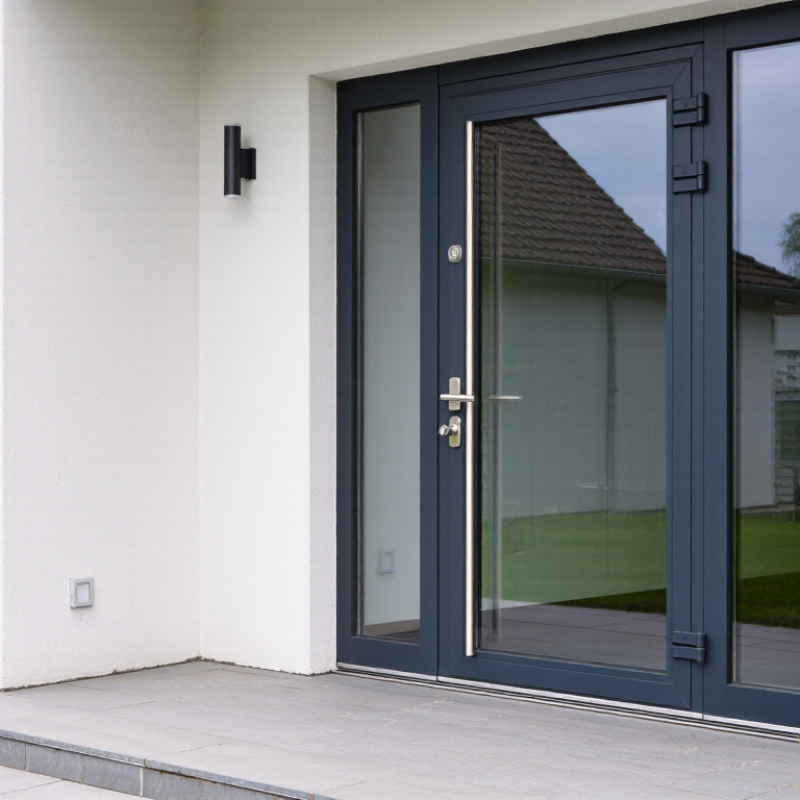
The best aluminum front door begins with its construction, not its appearance. In field inspections, I look for a thermally broken frame. This design separates interior and exterior aluminum with an insulating material. It reduces heat transfer and helps limit interior condensation. A strong frame also needs reinforced corners, accurate hinges, and a stable threshold. Thin profiles may look elegant, but they can flex under repeated use.
Door performance depends on more than the metal. Double or triple glazing can improve insulation, while laminated glass may improve impact resistance. Reliable weather seals should compress evenly around the panel. Check the drainage paths, too. Blocked channels can send rain toward the interior. A quality multi-point lock can improve alignment and security, but installation remains critical. Small gaps often cause bigger problems.
Finish quality matters in harsh sunlight and wet climates. Powder coating can resist fading and corrosion when properly prepared. However, no finish stays perfect without cleaning and inspection. I have seen well-made doors perform poorly because installers ignored the wall opening. That is an uncomfortable lesson. Measure the opening carefully, seal the perimeter correctly, and allow for building movement. The best choice balances thermal performance, structural strength, glass specification, and local weather conditions.
What Is the Best Aluminum Front Door?
The best aluminum front door balances insulation, security, weather resistance, and daily comfort. A thick panel alone does not guarantee quality. Look for a thermal break, insulated core, and accurately fitted seals. These features help reduce drafts near the threshold. A reliable door should also resist warping, corrosion, and repeated opening. Check the frame joints, hinges, lock system, and drainage paths. In practice, poor installation can weaken an excellent door. Measure the opening carefully, and ask for performance data verified against recognized building standards.
Tips: Stand inside on a cold day and feel around the frame. Test the lock several times. Inspect the bottom seal for even contact. Ask how replacement hardware is handled. Small details matter.
Glass selection deserves equal attention. Low-emissivity glazing can improve comfort, while laminated glass may add security and reduce noise. However, more glass can increase heat gain or privacy concerns, depending on orientation. A shaded entrance needs different choices from a west-facing doorway. Finish quality also matters. Powder coating should appear even, without bubbles, thin edges, or visible scratches. Maintenance is usually simple, but coastal air can still demand regular cleaning. I would not choose appearance over thermal performance, though that mistake is easy to make. A beautiful door that admits cold air becomes disappointing every morning.
What Is the Best Aluminum Front Door?
The best aluminum front door depends on your entrance, climate, and daily habits. A slimline door creates a clean, modern appearance with more visible glass. A wider-stile design feels heavier and can suit traditional homes better. Pivot doors make a strong architectural statement, but they need careful alignment and enough opening space. Hinged doors usually provide simpler operation and easier weather sealing. Not every dramatic design works well.
Material quality affects comfort and service life. Standard extruded aluminum can perform well in mild conditions. Thermally broken aluminum reduces heat transfer through the frame, which matters in very hot or cold regions. Powder-coated finishes resist fading and surface wear, but color choice still affects heat absorption. In coastal areas, a suitable corrosion-resistant alloy and regular cleaning are sensible. Details matter. Poor drainage or an uneven threshold can undermine an expensive frame.
Glazing changes the door’s light, privacy, and energy performance. Double glazing with a low-emissivity coating suits many homes, while triple glazing may improve insulation in severe climates. Laminated glass helps reduce noise and remains bonded after breakage. Tempered glass offers stronger impact resistance, but it can shatter into small pieces. Large clear panels brighten a hallway, although they may reveal more of the interior than expected. I once preferred a fully glazed entrance, then reconsidered it after noticing afternoon glare and fingerprints. A frosted side panel might have been the better compromise.
| Door Style | Best For | Frame and Panel Construction | Thermal Performance | Glazing Options | Natural Light | Maintenance | Key Considerations |
|---|---|---|---|---|---|---|---|
| Flush Panel Door | Minimalist façades, contemporary homes, and privacy-focused entrances | Insulated aluminum panel with a thermally broken aluminum frame; the insulated core reduces heat transfer through the panel | Very good when the frame is thermally broken and the panel is insulated; performance depends on the complete tested door assembly | Usually solid, with optional narrow sidelites or a glazed transom | Low | Excellent | Offers strong privacy and a clean appearance, but provides limited daylight unless combined with adjacent glazing |
| Full-View Glass Door | Bright entryways, garden-facing entrances, and homes that prioritize visibility | Thermally broken aluminum perimeter frame with a large insulated glass unit | Good with double glazing; very good with low-emissivity coatings, argon fill, warm-edge spacers, and suitable solar-control glass | Clear, low-e, laminated, tinted, frosted, or solar-control insulated glass | Very high | Very good | Glass selection strongly affects heat gain, heat loss, privacy, glare, and security |
| Half-Glass Door | General residential entrances requiring a balance of daylight and privacy | Insulated aluminum panel in the lower section with an insulated glazed section above | Good when the panel and glass have compatible thermal performance; the glass area remains the main variable | Double-glazed low-e, laminated, frosted, obscure, or decorative glass | Medium to high | Very good | A practical compromise between a solid door’s privacy and a full-view door’s daylight |
| Door with Sidelites | Wide entry elevations and spaces that need additional daylight without enlarging the door leaf | Insulated aluminum door leaf with fixed glazed panels installed beside the door | Good if the door, sidelites, and frame use thermally broken construction and compatible glazing | Insulated low-e, laminated, frosted, tinted, or decorative glass | High | Very good | Improves daylight and visual scale, but increases the total glazed area and may reduce privacy |
| Pivot Door | Large statement entrances and wide contemporary openings | Large aluminum door slab supported by top and bottom pivot hardware; often paired with a reinforced, thermally broken frame | Good to very good when correctly engineered; oversized leaves require careful control of air, water, and thermal performance | Solid panel, vertical glass insert, or large insulated glass section | Low to high | Very good | Requires accurate structural support, alignment, weather sealing, and hardware adjustment |
| Double Entry Door | Wide foyers, formal entrances, and homes requiring a broad clear opening | Two aluminum door leaves within a reinforced frame; an astragal and multi-point locking system can improve sealing and security | Good when both leaves close evenly and the frame is thermally broken; the meeting stile is an important air-sealing area | Solid panels, upper glazing, decorative glass, or insulated glass inserts | Medium to high | Very good | Provides a wide opening, but alignment, locking, and weather sealing are more demanding than with a single door |
| Sliding Aluminum Door | Indoor-outdoor transitions, patios, and entrances where swing clearance is limited | Aluminum-framed glazed panels running on rollers within a track system; thermal breaks improve insulation | Good with thermally broken frames and high-performance insulated glass, although sliding seals may differ from hinged-door seals | Double- or triple-glazed low-e, laminated, tinted, or solar-control glass | Very high | Good | Saves floor space, but tracks need cleaning and roller or seal maintenance over time |
| Arched or Custom-Shaped Door | Architectural projects and entrances requiring a distinctive opening shape | Custom-fabricated aluminum frame and panel or glazing system; curved or angled components may require specialized fabrication | Variable; performance depends on the design, corner details, glazing shape, and tested weather seals | Custom insulated glass, laminated glass, decorative glass, or solid insulated panels | Variable | Very good | Can create a strong architectural focal point, but custom geometry may increase lead time and installation complexity |
Note: Actual energy efficiency, air leakage, water resistance, wind resistance, and security depend on the complete door assembly, including the frame, panel, glass, seals, hardware, installation, and local climate conditions. A thermally broken aluminum frame uses a less conductive insulating section between the interior and exterior frame components to reduce heat transfer.
A high-quality aluminum front door should reduce heat transfer, block drafts, and manage moisture. Look for a thermal break between the exterior and interior aluminum sections. Without it, the frame may feel cold during winter and warm during summer. Small gaps matter. Inspect the glazing, corner joints, and compression seals closely. Double or triple glazing can improve insulation, but installation quality remains equally important. A poorly fitted door can waste energy despite excellent materials.
Security depends on the complete system, not aluminum alone. A reinforced frame, multi-point locking mechanism, protected cylinders, and strong hinges provide practical resistance against forced entry. Check how the lock engages along the frame. It should close firmly without excessive pressure. Laminated glass may add another protective layer. A heavier door is not automatically safer, though I once treated weight as a useful shortcut. That assumption was incomplete.
Durability comes from sound drainage, stable finishes, and accurate installation. Powder-coated surfaces usually resist fading and corrosion, but coastal air still demands more frequent inspection. Wipe the frame with mild soapy water, clear drainage channels, and lubricate moving hardware as directed. Avoid abrasive cleaners. They can dull the finish quickly. Examine seals annually for cracking or flattening. If water collects near the threshold, repair it early. Even a well-designed aluminum door can fail when maintenance is neglected. The best choice balances thermal performance, security hardware, weather exposure, and the installer’s attention to detail.
What Is the Best Aluminum Front Door?
Choosing the Right Aluminum Front Door for Your Home
The best aluminum front door is not simply the thickest or most expensive model. It should suit your climate, entry size, daily habits, and home’s architectural lines. Begin with the frame. A thermally broken frame can reduce cold transfer, especially around heated rooms and shaded porches. Ask for measured U-values, not vague claims about efficiency. Those figures provide a more reliable comparison.
During site checks, I look for water thresholds, hinge alignment, and the direction of the swing. A door may look elegant in a showroom but feel awkward beside a narrow hallway. Measure twice. Leave room for a mat, furniture, and a delivery parcel. Multi-point locking can improve resistance to forced entry, but only when installed correctly. Strong hardware cannot fix a twisted frame. A qualified installer should verify the opening before production begins.
Choose powder-coated aluminum for a durable exterior finish, then inspect the color sample outdoors. Indoor lighting can hide subtle undertones. Use insulated glazing if the door includes glass, and check its safety rating with the supplier. Weather seals should meet evenly around the slab, without visible gaps. Ask who handles adjustment after installation. I would not rely on appearance alone; even a beautiful door can close poorly after seasonal movement. Some advice sounds certain. Your own measurements may prove otherwise.
A good door balances insulation, security, weather resistance, and comfortable daily use. A thick panel alone is not enough. Look for a thermal break, insulated core, accurate seals, strong hinges, and reliable drainage.
A thermal break reduces heat transfer through the aluminum frame. It can limit drafts and improve indoor comfort during very hot or cold weather. Check the threshold carefully. That area often exposes weak insulation.
Measure the opening accurately and inspect the frame joints. Stand indoors on a cold day and feel around the frame. Test the lock several times. Also check whether the bottom seal touches evenly.
Yes. Poor installation can weaken an excellent door. An uneven threshold may cause leaks, drafts, or difficult operation. Ask about fitting methods and verified performance data. I might focus too much on the door itself.
Hinged doors usually offer simple operation and easier weather sealing. Slimline doors provide a modern look and more visible glass. Wider stiles can feel heavier and suit traditional homes. Pivot doors need careful alignment and enough opening space.
Double glazing with a low-emissivity coating suits many homes. Triple glazing may help in severe climates. Laminated glass can reduce noise and remain bonded after breakage. Tempered glass offers impact resistance but may shatter into small pieces.
Large clear panels brighten a hallway but may reveal too much indoors. West-facing entrances can receive strong afternoon glare and heat. A frosted side panel may provide a better compromise. More glass is not always better.
Powder coating should look even, without bubbles, thin edges, or scratches. Clean the surface regularly, especially near the coast. Coastal air can increase corrosion concerns. Use a suitable corrosion-resistant alloy where needed.
Review replacement hardware, lock operation, drainage paths, hinges, seals, and frame joints. Check the opening space before selecting a pivot design. Consider fingerprints, privacy, glare, and heat gain. The attractive option may still disappoint every morning.
Choosing the best Aluminum Front Door requires more than focusing on appearance. Its construction, frame quality, panel design, hardware, and glazing all influence overall performance. A well-designed door should offer structural strength, stable operation, and reliable protection against weather exposure. Homeowners can compare modern, traditional, minimalist, or custom styles, while selecting suitable glass options for privacy, daylight, and visual appeal.
Energy efficiency, security, durability, and maintenance are also essential considerations. Thermally improved frames, insulated cores, and properly sealed glazing can help reduce heat transfer and improve indoor comfort. Strong locking systems, reinforced components, and impact-resistant materials can enhance security. Aluminum is naturally resistant to rust and warping, making it a practical long-term choice, although regular cleaning and periodic hardware checks are still recommended. The right Aluminum Front Door should match the home’s architecture, climate, entrance size, privacy needs, and budget while providing lasting performance and a welcoming appearance.

Steelwar