How to Choose an Aluminium Entry Door in 2026?

Time:2026-10-01 Author:Sophia
0%

Choosing an Aluminium Entry Door in 2026 requires more than comparing colours and catalogue prices. The right door should balance security, insulation, durability, accessibility, and architectural character. A slim aluminium frame can create a wider glass area, bringing daylight across a dark hallway. However, appearance should never hide weak hinges, poor seals, or unreliable locking hardware.

In practice, performance depends on the complete door system, not aluminium alone. Look for thermally broken frames, weather-resistant finishes, tested hardware, and clear energy-performance information. Local climate matters. A coastal home may need stronger corrosion protection, while a cold region demands careful attention to thermal bridging and airtight installation. Ask suppliers about independent testing, product warranties, replacement parts, and installer experience. These details often reveal more than polished showroom displays.

Security should be practical. A multi-point lock, reinforced hinges, laminated glazing, and a correctly fitted cylinder can make a meaningful difference. Yet no door performs perfectly without regular adjustment and maintenance. That is easy to overlook. Inspect seals annually, clear drainage channels, and check closing pressure after seasonal movement. Certification names and energy ratings can also vary between markets, so verify the original documentation before purchasing. An experienced installer should measure the opening precisely and explain how the threshold manages rainwater. This guide examines those decisions clearly, while recognising an uncomfortable truth: the most expensive door is not automatically the best one. Reliable evidence, honest specifications, and suitable installation matter more than marketing language.
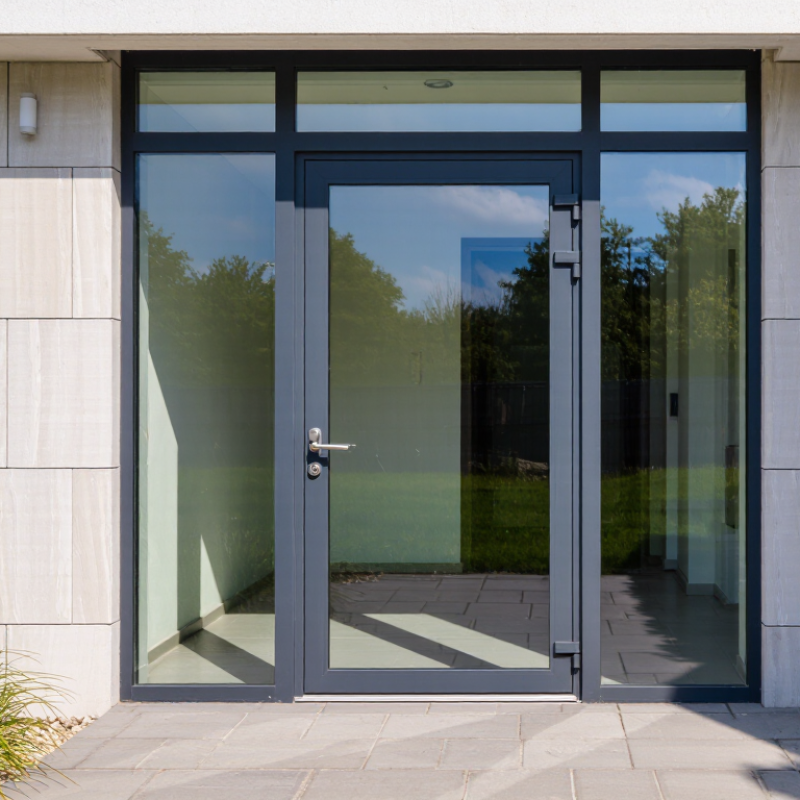
How to Choose an Aluminium Entry Door in 2026?

What Is an Aluminium Entry Door?

An aluminium entry door is an exterior door built with aluminium profiles, a panel, glass, hinges, seals, and locking hardware. Aluminium is light, strong, and resistant to swelling, making it suitable for changing weather. Its clean surface also supports slim frames and larger glass areas.

Modern aluminium doors commonly include a thermal break inside the frame. This insulating section reduces heat transfer between the outdoor and indoor metal surfaces. Quality seals help limit drafts, rain, and street noise. However, aluminium is not automatically energy efficient. A basic frame with weak seals can feel cold near the edges during winter. The glass, threshold, and installation matter just as much.

When choosing an aluminium entry door in 2026, check its tested thermal performance rather than trusting vague claims. Ask about the frame’s U-value, the glazing specification, and resistance to air and water leakage. A low threshold may improve accessibility, but it needs careful drainage in wet climates. Powder-coated finishes usually need little maintenance, although scratches should be repaired before corrosion spreads around exposed hardware. In my experience, a door can look impressive in a showroom yet operate poorly after installation. Small alignment errors may cause rubbing, loose seals, or difficult locking. Inspect the hinges, handle movement, gasket contact, and frame corners before accepting the finished work. Forgetting these details is an easy mistake.

Which Aluminium Door Style and Configuration Suit Your Home?

How to Choose an Aluminium Entry Door in 2026?

Which Aluminium Door Style and Configuration Suit Your Home?

Your entrance should fit daily life, not only photographs. In site assessments, I check the hallway width, opening direction, daylight, and weather exposure. A single hinged door suits compact façades and carries furniture more easily. Double doors create a generous opening, but they need enough wall space and careful alignment. Sliding configurations feel modern and save swing space. However, their tracks require regular cleaning.

Glass selection changes the atmosphere dramatically. Full-height glazing brightens a dark hallway, while a narrow vertical panel offers privacy. The U.S. Department of Energy reports that windows can represent 25–30% of household heating and cooling energy use. Therefore, choose insulated glazing and thermally improved aluminium frames, especially for large glazed doors. The International Energy Agency’s 2023 Global Status Report states that buildings consume about 30% of global final energy. Small specification choices matter.

Configuration should also reflect climate and security needs. A sheltered entrance may accept a wider glass area. An exposed entrance needs reliable weather seals, drainage, and a robust threshold. Check the door’s declared thermal performance, air permeability, water tightness, and resistance to wind load. These are more useful than vague claims such as “premium” or “energy efficient.” I still see homeowners choosing inward-opening doors without checking furniture placement. It is an easy mistake. Measure the clear opening, not just the frame size.

How to Choose an Aluminium Entry Door in 2026?

Which Aluminium Door Style and Configuration Suit Your Home?

Common residential aluminium entry-door configurations are compared by their typical overall frame width. A single door suits compact entrances, while sidelite and double-door layouts provide more daylight, visual impact, and furniture access. Final dimensions should be checked against local building regulations and site conditions.

Quick guide: Choose a single-leaf door for limited space, add a sidelite when you want more natural light, and consider a double-door or full-width glazed configuration for large façades and wide circulation routes.

How to Evaluate Thermal Performance, Security, and Durability

How to Choose an Aluminium Entry Door in 2026?

In 2026, an aluminium entry door should protect comfort, safety, and daily convenience. Thermal performance deserves careful attention. Check the whole door’s U-value, not only the insulated panel. A low number indicates better heat retention, but it is not the whole story. Look for a continuous thermal break, insulated glazing, and accurate weather seals. During a site inspection, I have seen excellent frames perform poorly because the threshold was fitted unevenly. Installation matters as much as the specification.

Security needs practical evaluation. Choose a reinforced frame with a tested multipoint locking system. Check hinge protection, cylinder resistance, and the strength of the surrounding wall. Laminated glass can reduce the risk of dangerous breakage near the handle. Ask for independent test results instead of relying on impressive sales language. Security is layered. One strong lock cannot correct a weak frame.

Tips: Feel for cold air around the closed door. Try the handle before ordering. Ask how often seals need replacement. Inspect the drainage path beneath the threshold. For durability, select a stable powder-coated finish and corrosion-resistant hardware. Coastal homes need extra protection against salt exposure. A written warranty helps, but read its exclusions carefully. I once overlooked maintenance access on a project, and that decision created unnecessary repair work later. Some details still deserve more thought.

How to Choose Glass, Hardware, Finishes, and Custom Features

How to Choose an Aluminium Entry Door in 2026?

Glass, hardware, finishes, and custom features determine how an aluminium entry door performs daily. Start with the glass, not the appearance. Clear glass brings generous daylight but reveals more indoor activity. Frosted or textured glass offers privacy while keeping rooms bright. For busy streets, laminated glass can reduce noise and improve security. Ask for the glass thickness, thermal rating, and replacement process. These details matter after installation.

Hardware should feel solid, smooth, and easy to operate. Test the handle with one hand. Check the lock alignment when the door is closed. Stainless steel or coated metal hardware usually handles damp entrances better. Still, even excellent hardware can fail when the frame shifts. Accurate installation matters as much as the specification.

Powder-coated finishes offer consistent colour and resist everyday wear. Dark colours look striking, but they may show dust and scratches quickly. Request a physical sample beside your exterior wall. Digital colours can mislead. I once approved a finish from a screen, and the installed shade looked noticeably warmer. That mistake was avoidable. Custom features may include concealed hinges, sidelights, low thresholds, integrated blinds, or smart access preparation. Confirm dimensions, drainage, maintenance access, and future repair options in writing. More features are not always better. Choose only what solves a real need.

How to Compare Installation Requirements, Costs, and Maintenance

How to Choose an Aluminium Entry Door in 2026?

Choosing an aluminium entry door starts with the opening, not the showroom sample. During site surveys, I check width, height, wall condition, and the threshold level. A square opening prevents uneven gaps and difficult locking. Ask the installer whether the frame needs packers, new flashing, or structural repair. These details can change the labour bill quickly. Replacement projects often cost more when old frames damage plaster or insulation. I once underestimated this issue. The door looked simple. The surrounding wall was not.

Tips: Request an itemised quotation. Compare installation hours, trims, sealants, disposal, and possible permit fees. Confirm who handles final adjustment after fitting. A low quote may exclude essential waterproofing.

Good installation should include a drained sill, continuous weather seals, and suitable insulation around the frame. In exposed locations, verify wind and water performance against local building requirements. Thermal breaks can reduce cold bridging, but they do not correct poor fitting. Maintenance is usually modest. Clean the frame with mild soap, clear drainage channels, and inspect seals twice yearly. Hinges and locks may need adjustment after seasonal movement. Do not assume every aluminium finish ages identically; strong sunlight and coastal air can reveal weaknesses sooner. A reliable installer records measurements, product specifications, and care instructions. That paperwork matters when repairs become necessary.

How to Choose an Aluminium Entry Door in 2026? - How to Compare Installation Requirements, Costs, and Maintenance

Door Configuration Typical Use Recommended Installation Requirements Indicative Installed Cost* Thermal Performance Maintenance Needs Typical Service Life Best Choice When...
Non-thermally broken aluminium door Interior entrances, mild climates, garages, and low-traffic utility entrances Sound, square opening; corrosion-resistant fasteners; sill drainage; compatible weatherstripping; careful separation from dissimilar metals US$1,500–US$4,000 Lower insulation; aluminium frame may create a noticeable thermal bridge Clean twice yearly; inspect seals and hardware annually; lubricate hinges and locks as specified 20–30 years with suitable exposure protection The budget is limited and winter or summer temperature differences are moderate
Thermally broken aluminium door Main residential entrances in cold, hot, or mixed climates Accurate measurement; insulated perimeter shims; continuous air and water sealing; level sill; compliance with local energy and egress requirements US$2,500–US$6,500 Improved insulation because the frame includes a low-conductivity thermal separator; performance depends on glazing and weather seals Clean with mild soap; inspect gaskets, drainage paths, finish, and adjustment points once or twice yearly 25–40 years when correctly installed and maintained Energy efficiency, interior comfort, and reduced condensation are priorities
Insulated aluminium-panel door High-privacy front entrances and locations exposed to weather Rigid, well-supported frame; insulated threshold; accurate panel alignment; perimeter backer rod and sealant where required US$2,200–US$5,500 Generally better than a single-glazed door; frame thermal performance remains important Low maintenance; wash finish periodically and check panel joints, seals, hinges, and threshold drainage 25–40 years, depending on coating and coastal exposure Privacy, security, and weather resistance matter more than daylight
Partially glazed aluminium door Entrances that need daylight while retaining reasonable privacy Safety glazing where required; correct glass orientation; compatible glazing blocks and gaskets; adequate shims; weather-sealed frame US$2,500–US$6,500 Depends on glass type; double glazing and low-emissivity coatings generally improve insulation Clean glass and frame; inspect gaskets and sealant; replace cracked or failed glazing promptly 25–35 years; glazing seals may require earlier replacement Natural light is desired without using a fully glazed entrance
Fully glazed aluminium door Modern homes, offices, retail-style entrances, and high-visibility areas Tempered or laminated safety glass as required; robust hinges and closer; safety markings where applicable; precise frame anchoring US$3,000–US$8,000 Varies widely with glazing; double glazing, low-emissivity coatings, and solar-control glass can improve performance Frequent glass cleaning; check closer force, hinges, gaskets, and drainage at least annually 20–35 years; hardware and seals may need periodic replacement Daylight and visual openness justify higher cleaning and glazing costs
Oversized, double, or pivot-style aluminium door Large architectural openings and statement entrances Structural opening review; reinforced jambs or header where necessary; specialist handling; floor and head clearances; careful load and hardware coordination US$6,000–US$18,000+ Can be good with thermally broken frames and insulated glazing, but large glass areas increase heat gain or loss Inspect alignment, pivot hardware, seals, drainage, and operating clearances every 6–12 months 20–35 years, depending on hardware load and exposure The design requires a large opening and the structure can support the additional weight

Cost and specification notes:

  • *The installed-cost ranges are indicative 2026 U.S. residential-market estimates for a typical single entrance. Actual prices vary by opening size, glazing, hardware, labor rates, structural work, delivery, permits, and location.
  • Replacement openings commonly require removal of the existing door, inspection of the rough opening, sill preparation, shimming, anchoring, insulation, and interior and exterior weather sealing.
  • Confirm local requirements for minimum clear opening, safety glazing, emergency egress, threshold height, accessibility, wind loads, water management, and energy performance before ordering.
  • In coastal or high-pollution areas, rinse aluminium surfaces with clean water more frequently and avoid abrasive cleaners, chloride-containing products, and contact between incompatible metals.

FAQS

What is an aluminium entry door?

It is an exterior door made from aluminium profiles, panels, glass, hinges, seals, and locking hardware. Aluminium is light, strong, and resistant to swelling. Slim frames can also create larger glass areas.

Is an aluminium entry door automatically energy efficient?

No. A thermal break, insulated glass, quality seals, and correct installation all matter. Weak seals can create cold edges in winter. The whole door matters.

Which thermal details should I check before buying?

Ask for the complete door’s U-value, not only the panel’s rating. Check the thermal break, glazing specification, threshold, and weather seals. Also ask about air and water leakage tests.

How can I evaluate the door’s security?

Look for a reinforced frame and a tested multipoint locking system. Check hinge protection, cylinder resistance, and the surrounding wall. Laminated glass can improve safety near the handle. One strong lock is not enough.

What should I inspect during installation?

Close the door and test the handle several times. Check hinge movement, gasket contact, frame corners, and lock alignment. Feel for drafts around the edges. Small fitting errors can cause large problems later.

How do I choose the right glass?

Clear glass provides strong daylight but reduces privacy. Frosted or textured glass keeps rooms brighter while hiding indoor activity. Laminated glass can reduce street noise and dangerous breakage. Ask about thickness, thermal performance, and replacement access.

Which finishes and hardware are suitable for daily use?

Powder-coated finishes usually need little maintenance and resist ordinary wear. Stainless or coated metal hardware suits damp entrances. Dark finishes may show dust and scratches quickly. Request a physical sample, because screen colours can mislead.

Are custom features worth adding?

Choose features that solve a clear need, such as sidelights, concealed hinges, low thresholds, or integrated blinds. Confirm dimensions, drainage, maintenance access, and future repairs in writing. More features are not always better. I would reconsider decorative additions without a practical purpose.

Conclusion

Choosing an Aluminium Entry Door in 2026 involves balancing appearance, performance, security, and long-term value. An Aluminium Entry Door offers a strong, lightweight frame with excellent resistance to moisture, warping, and corrosion, making it suitable for many home styles. Start by selecting a configuration that fits your entrance, such as a single, double, hinged, or pivot design, while considering available space, traffic flow, and architectural character.

Evaluate thermal performance through insulated frames, quality seals, and energy-efficient glazing, then review locking systems, reinforced construction, and weather resistance for security and durability. Glass options, handles, hinges, colors, textures, and custom dimensions can help create a practical and personalized entrance. Before ordering, confirm accurate measurements, wall conditions, threshold details, and professional installation requirements. Compare the full cost, including delivery, fitting, and future maintenance, rather than focusing only on the initial purchase price. With careful planning, the right Aluminium Entry Door can improve comfort, protection, curb appeal, and everyday usability.

Sophia

Sophia

Sophia is a dedicated marketing professional with an exceptional depth of knowledge about her company's products and services. With a keen understanding of market trends and customer needs, she crafts insightful blog posts that not only inform but also engage readers, enriching the company’s online......