What Are the 2026 Best Aluminum Entry Door Types?

Time:2026-10-01 Author:Charlotte
0%

Choosing the best Aluminum Entry Door in 2026 requires more than comparing finishes and price tags. A strong entrance should withstand rain, wind, daily impact, and changing temperatures. It should also feel secure when the lock closes and comfortable when sunlight reaches the hallway.

Building-science educator Steve Baczek often emphasizes, “The building enclosure is a system, not a collection of parts.” That principle matters here. An Aluminum Entry Door is not an isolated product. Its frame, threshold, glass, sealants, hinges, lockset, and surrounding wall must work together. Even an attractive door can perform poorly when installation leaves a small gap beneath the sill.

Small details matter.

This guide examines the leading 2026 door types, including thermally broken aluminum doors, insulated panel designs, glass-panel entrances, pivot systems, and narrow-profile models. We will compare insulation, weather resistance, security hardware, maintenance, accessibility, and long-term appearance. Real homes also create compromises. A large glass panel may brighten a dark foyer, yet it can reduce privacy and increase solar heat. A minimalist frame may look refined, but replacement hardware can be less convenient.

The “best” option is therefore not identical for every property. Coastal homes need stronger corrosion protection. Cold climates need better thermal breaks. Busy households may value scratch-resistant finishes over dramatic styling. This article keeps those practical differences visible, while questioning a common assumption: the most expensive Aluminum Entry Door is not automatically the most reliable choice.
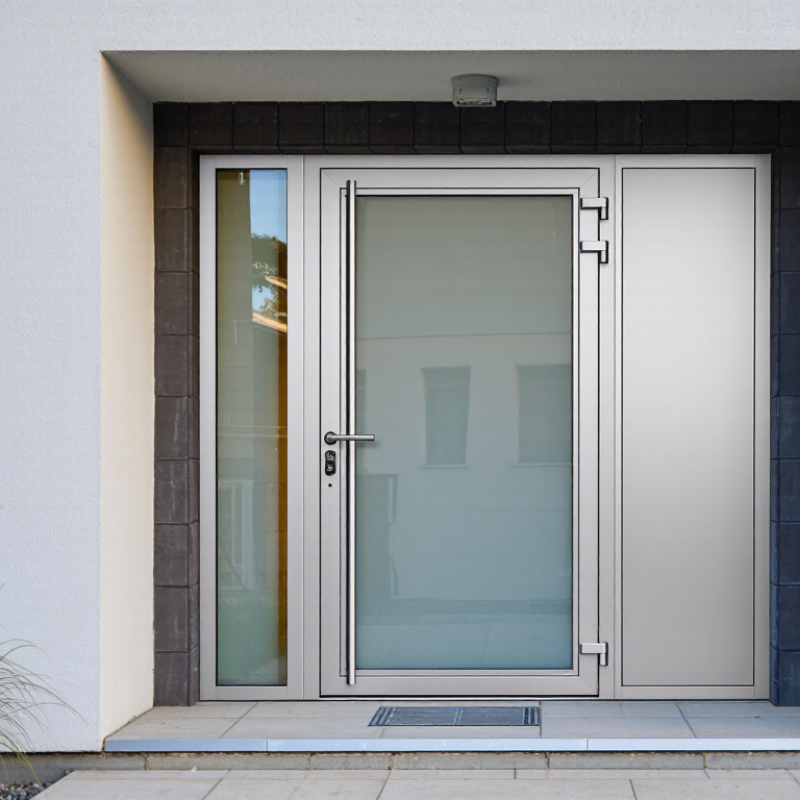
What Are the 2026 Best Aluminum Entry Door Types?

Aluminum Entry Door Types Defined by 2026 Performance Standards

In 2026, the best aluminum entry door is not defined by appearance alone. Its type should match measurable performance needs.

Thermal-break hinged doors reduce heat transfer through the frame. Insulated panel doors improve comfort in extreme seasons. Large glazed doors provide daylight, but their glass must meet tested energy and safety requirements. Pivot doors offer a dramatic entrance, yet their hardware needs careful load assessment.

Performance standards should guide the decision.

Check thermal transmittance, air leakage, water penetration, and structural pressure results. Coastal homes also need reliable corrosion resistance and drainage details. A secure lock is important, but frame anchoring matters just as much.

Field inspections often reveal small problems, such as uneven thresholds or weak seals. These flaws can reduce real performance. Specifications are useful, but installation quality remains easy to underestimate.

Tips:

Ask for independent test evidence, not only product claims. Measure the opening twice. Confirm the door’s swing, threshold height, and weather exposure. For glazed designs, inspect the edge seal and spacer details. A darker finish may look refined, but it can absorb more solar heat. Consider shading. Even experienced installers can miss minor alignment issues, so schedule a final inspection after adjustment.

Thermally Broken Doors: Compare U-Factors Under NFRC Rating Methods

What Are the 2026 Best Aluminum Entry Door Types?

For 2026, thermally broken aluminum entry doors deserve close attention in energy-conscious homes. A thermal break separates the exterior and interior aluminum with a low-conductivity polyamide section. This interrupts heat flow through the frame. The result can be a warmer interior frame in winter and less condensation around the threshold.

U-factor is the key comparison under NFRC rating methods. Lower numbers indicate better resistance to heat transfer. However, compare whole-door ratings, not only center-of-glass values. NFRC procedures consider the frame, panel, glazing, and edge details. A glazed aluminum door with a narrow vision panel may perform differently from a large glass door or a solid insulated panel door. Check the same size and configuration when comparing products. Otherwise, the numbers may mislead.

Installation matters more than many product pages admit. I have seen a well-rated door lose comfort because the sill was poorly sealed and the rough opening was uneven. Air leakage can weaken real-world performance. Look for a documented NFRC U-factor, tested dimensions, insulated cores, continuous weather seals, and a thermally improved threshold.

In colder regions, a lower U-factor usually deserves priority.

In mild climates, frame temperature and condensation control may matter more.

The “best” type is not universal. Even expert comparisons need a second look when local exposure, glass area, and installation quality change.

Insulated Aluminum Doors: Assess R-Values, Air Leakage, and Energy Codes

Choosing the best aluminum entry door in 2026 starts with thermal design, not appearance. Insulated models use a polyamide thermal break between interior and exterior aluminum sections. Without that separation, cold metal can create interior condensation and uncomfortable drafts. Foam-filled panels usually provide better insulation than hollow sections. Glazed doors need low-emissivity glass and insulated spacers.

R-value deserves careful attention. A higher number usually indicates stronger resistance to heat flow, but door ratings can be misunderstood. Center-of-panel performance may look impressive while the full assembly performs poorly. Ask for the tested door-system value, including the frame, glass, threshold, and hardware. Also check the U-factor, which energy professionals often use for complete product comparisons. Small details matter.

Air leakage can cancel much of the insulation benefit. Look for tested leakage results under recognized procedures, such as ASTM E283. A continuous compression gasket should meet the frame evenly, especially near the lock side. During installation, a smoke pencil can reveal movement around the threshold and corners. I have seen excellent doors weakened by uneven shims and excessive sealant. That mistake is easy to miss. Energy codes also vary by location, climate zone, and project type. Confirm the current local requirements before ordering, rather than relying on a catalog value. A door that meets one jurisdiction’s code may require better glazing or insulation elsewhere.

Flush, Panel, and Glass Designs: Match Styles to ASTM and FGIA Criteria

What Are the 2026 Best Aluminum Entry Door Types?

Flush, panel, and glass aluminum entry doors each suit different architectural and performance goals. Flush doors create a clean, quiet façade with fewer visual interruptions. They work well on modern homes and commercial entrances. Panel doors add depth through raised or recessed sections. Their shadows can make a narrow entry feel more substantial. Glass designs bring daylight inside, but they require careful attention to privacy, heat gain, and impact resistance.

ASTM testing helps turn appearance into measurable performance. Look for documented results for air leakage under ASTM E283, water penetration under ASTM E331, and structural pressure under ASTM E330. These tests matter during wind-driven rain, pressure changes, and repeated daily use. FGIA criteria, including the NAFS framework, also help classify product performance. Check the tested performance class, size limits, and installation conditions. A rating without its scope can mislead.

The frame, threshold, seals, hinges, and glass must work as one system. A flush door may look simple, yet poor drainage can expose weak detailing. Panel profiles may hide useful reinforcement, or they may only add decoration. Glass doors should use suitable glazing, secure hardware, and verified thermal data. Measure the opening carefully. Confirm the wall type, sill height, exposure, and local weather demands. I have seen attractive specifications fail because installation was treated as an afterthought. That mistake is easy to repeat. Recheck every detail.

2026 Aluminum Entry Door Design Fit by ASTM and FGIA Criteria

The chart compares three common aluminum entry-door configurations against key performance considerations used in ASTM testing and FGIA/NAFS-oriented specifications. Scores are design-fit ratings from 1 to 5, not laboratory certifications; final compliance depends on the complete tested assembly, glazing, hardware, installation, and project requirements.

ASTM E283 addresses air leakage, ASTM E330 addresses structural performance under uniform static air pressure, and ASTM E331 addresses water penetration. FGIA/NAFS evaluations consider the complete fenestration or door assembly rather than the visual style alone.

Security, Durability, and Corrosion: Evaluate AAMA and ASTM Test Ratings

What Are the 2026 Best Aluminum Entry Door Types?

For 2026, thermally broken aluminum doors remain a strong choice for exposed entrances. Their polyamide barrier reduces heat transfer through the frame. This matters near conditioned interiors and cold thresholds. The U.S. Department of Energy reports that windows and doors can represent a significant share of residential heating and cooling losses. However, published savings vary by climate, glass, installation, and air leakage.

Security and durability depend on tested performance, not door weight alone. Look for AAMA/FGIA or NAFS performance documentation, including ASTM E330 structural testing. ASTM E283 measures air leakage, while ASTM E331 evaluates resistance to water penetration. For coastal locations, ASTM B117 salt-spray results can reveal coating weaknesses. Yet salt spray is not a perfect prediction of outdoor service life. That limitation deserves attention. AAMA 2605-rated finishes generally offer stronger color retention and corrosion resistance than lower-grade coatings, but damaged edges still need maintenance.

Tips: Ask for the complete test report, not a marketing label. Check the design pressure rating for your wind zone. Inspect the sill, fasteners, drainage paths, and gasket compression. For large glass panels, compare the door’s water rating with the surrounding wall system. A beautiful door can still leak. Also, request finish samples after abrasion or scratch testing when possible. No rating replaces correct installation.

What Are the 2026 Best Aluminum Entry Door Types? - Security, Durability, and Corrosion: Evaluate AAMA and ASTM Test Ratings

Door type Typical construction Security profile Durability and weather performance Corrosion-resistant finish options Relevant AAMA / ASTM evaluation Best use
Thermally broken glazed door Aluminum frame with a polyamide thermal barrier, insulated safety glass, multi-point lock, and adjustable weather seals. Strong everyday residential security; laminated glass and a multi-point lock can improve forced-entry resistance. Better control of condensation and heat transfer than non-thermal aluminum; performance depends on the complete door assembly. Anodized aluminum meeting AAMA 611, or high-performance organic coating meeting AAMA 2604 or AAMA 2605. Look for assembly results to ASTM E283 for air leakage, ASTM E331 for water penetration, and ASTM E330/E330M for structural performance. Energy performance may be documented by U-factor and solar heat-gain coefficient. Best overall balance for homes in mixed, cold, hot, or humid climates.
Insulated aluminum panel door Insulated aluminum or aluminum-clad panels with a reinforced core, compression seals, and a heavy-duty threshold. High privacy and a solid feel; reinforced strike-side framing and long screws improve lock-area strength. Usually offers better thermal stability and lower air leakage potential than a basic hollow aluminum panel. AAMA 2604 or AAMA 2605 coating is suitable where greater color retention and weathering resistance are required; anodizing can be specified under AAMA 611. ASTM E283, ASTM E331, and ASTM E330/E330M are appropriate assembly tests. ASTM B117 salt-spray exposure is a coating comparison test, not a complete door-service-life rating. High-privacy entrances, windy locations, and façades exposed to frequent rain.
Heavy-duty commercial aluminum entrance Extruded aluminum stiles and rails, reinforced corners, commercial-grade hinges, closer, threshold, and replaceable weather seals. Designed for frequent operation; can accept panic hardware, mortise locks, access-control hardware, and security glazing. High resistance to repeated cycling when hardware and hinges are correctly sized; thermal performance varies widely by frame design. AAMA 2604 or AAMA 2605 organic coatings; AAMA 611 anodized finishes are also commonly specified for aluminum architectural products. Specify tested air, water, and structural results using ASTM E283, ASTM E331, and ASTM E330/E330M. For exterior pedestrian doors, request the applicable performance-class or product-standard documentation. High-traffic homes, apartment buildings, offices, and retail entrances.
Aluminum pivot entry door Large-format slab supported by a floor or concealed pivot system, reinforced frame, concealed closer, and perimeter seals. Can be highly secure with a concealed multi-point lock, laminated glazing, and anti-lift protection; pivot hardware must be properly engineered. Suitable for large openings, but greater panel size and movement can make air and water control more demanding. AAMA 2604 or AAMA 2605 coatings are appropriate for demanding exposure; AAMA 611 anodizing is another option for compatible aluminum surfaces. Require whole-assembly testing to ASTM E283, ASTM E331, and ASTM E330/E330M rather than relying only on frame or hardware data. Modern entrances requiring wide panels and a strong architectural appearance.
Storm-rated aluminum entry door Engineered frame, reinforced corners, impact-resistant or laminated glazing, robust anchorage, and tested locking hardware. Best choice where wind-borne debris, elevated wind pressure, or severe weather is a major concern. Performance is determined by the tested product and installation method; field anchorage and surrounding wall construction are critical. Use a coating system appropriate to the exposure, such as AAMA 2604, AAMA 2605, or an applicable AAMA 611 anodized finish. Verify documented structural and water results to ASTM E330/E330M and ASTM E331. Where required by the project, also check the applicable regional wind-borne-debris or building-code approval. Coastal and hurricane-prone regions, exposed high-rise locations, and severe-weather zones.
Anodized aluminum entry door Aluminum frame with an electrochemically formed oxide layer; may be thermally broken, glazed, or panelized. Security depends mainly on the frame, glazing, lock, hinges, and anchorage rather than the anodized finish itself. The finish does not peel like an organic film, but appearance and service life depend on alloy, seal quality, cleaning, and environmental exposure. Specify an architectural anodic finish evaluated under AAMA 611; coastal exposure may require additional design and maintenance precautions. AAMA 611 addresses anodized architectural aluminum. ASTM E283, E331, and E330/E330M evaluate the door assembly’s air, water, and structural performance. Projects prioritizing a metallic appearance, abrasion resistance, and low coating maintenance.
Coastal-grade aluminum entry door Thermally broken or reinforced aluminum frame, corrosion-resistant fasteners, isolated dissimilar metals, sealed joints, and marine-suitable hardware. Security can range from standard residential to high security; specify laminated glazing and multi-point locking when required. Designed to reduce galvanic corrosion and salt-related deterioration; routine freshwater rinsing and inspection remain important near the sea. AAMA 2605 or a suitable AAMA 611 anodized finish, combined with compatible sealants, fasteners, and drainage details. No finish eliminates all coastal maintenance. Use ASTM B117 only as controlled salt-fog exposure information for the finish or hardware; combine it with ASTM E283, ASTM E331, and ASTM E330/E330M assembly results. Marine environments, salt-air locations, pool areas, and buildings with persistent high humidity.
How to read the ratings: AAMA 2603, 2604, and 2605 describe different levels of performance for organic coatings; AAMA 611 covers anodized architectural aluminum. ASTM E283 evaluates air leakage, ASTM E331 evaluates water penetration under pressure, and ASTM E330/E330M evaluates structural performance under uniform static air pressure. Test values belong to the complete door assembly and should not be treated as universal ratings for every door of the same type.

FAQS

What defines the best aluminum entry door in 2026?

Measured performance matters more than appearance alone. Match the door type to climate, glass area, exposure, and installation conditions. There is no universal best choice.

Why choose a thermally broken aluminum door?

A low-conductivity section separates interior and exterior aluminum. This reduces heat transfer through the frame. The interior frame may feel warmer during winter.

How should I compare U-factors?

Choose the lower U-factor when greater thermal resistance is needed. Compare whole-door ratings, not only center-of-glass values. Use the same size and configuration.

Do insulated panels improve entry comfort?

Insulated panels can reduce heat movement through the door surface. They may suit homes facing extreme seasonal temperatures. Check the complete door rating, including its frame and edges.

Are large glass entry doors energy efficient?

Large glass doors can provide strong daylight. They may also increase solar heat gain and reduce privacy. Check glazing, edge seals, spacer details, and tested energy data.

What performance tests should an aluminum entry door have?

Look for documented air leakage, water penetration, and structural pressure results. Common references include ASTM E283, ASTM E331, and ASTM E330. Confirm the tested size and conditions.

Are pivot doors suitable for every entrance?

Pivot doors create a dramatic entrance, but their hardware carries significant loads. The frame, hinges, and anchoring require careful assessment. A striking design can still perform poorly.

What installation details should I inspect?

Measure the opening twice. Check threshold height, swing direction, drainage, seals, and frame alignment. Uneven sills and weak seals can reduce real performance.

What matters for homes near the coast?

Select reliable corrosion resistance and carefully planned drainage. Inspect exposed hardware and frame joints. Salt air is unforgiving.

How can I avoid trusting specifications too much?

Ask for independent test evidence, not only product claims. Schedule a final inspection after adjustment. I would still recheck small alignment details, because good specifications can fail during installation.

Conclusion

Choosing the best Aluminum Entry Door in 2026 requires more than comparing appearance and price. Performance standards now emphasize energy efficiency, weather resistance, safety, and long-term durability. Thermally broken doors should be compared through NFRC U-Factor methods, with lower values generally indicating better insulation. Insulated aluminum doors should also be evaluated by R-Value, air leakage performance, and compliance with current energy codes to help reduce heat loss and improve indoor comfort.

Design is equally important, but each style should support the project’s performance goals. Flush, panel, and glass configurations can be matched to applicable ASTM and FGIA criteria for structural strength, water resistance, and operation. Security and durability evaluations should include AAMA and ASTM test ratings, while corrosion resistance is essential for humid, coastal, or high-exposure locations. By balancing thermal performance, construction quality, design, and tested resistance to weather and forced use, homeowners and builders can select an entry door that offers reliable protection, efficiency, and lasting visual appeal.

Charlotte

Charlotte

Charlotte is a seasoned marketing professional with a deep understanding of the company's portfolio and a passion for elevating its presence in the market. With a keen eye for detail and a commitment to excellence, she ensures that our professional blog is regularly updated with insightful articles......